Cormorant Garamond · Light
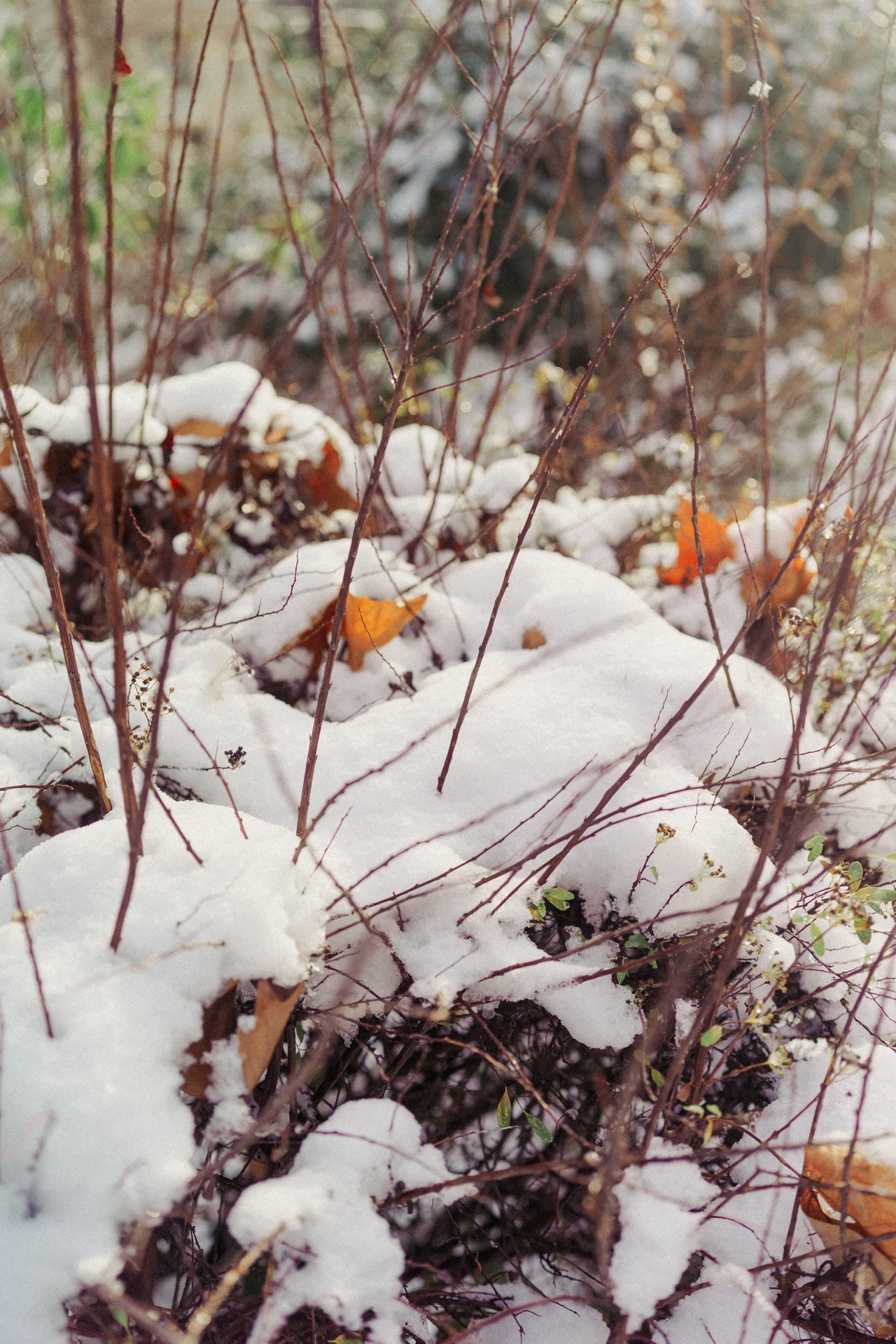
Paris had not seen snow like this in years. The city woke in silence — that particular silence that only snowfall brings, where the traffic fades and footsteps soften and the buildings stand a little straighter, as if surprised by their own beauty.
I had come for the museums. For Gerhard Richter at the Fondation Louis Vuitton, for whatever Pinault had hung in his rotunda at the Bourse de Commerce. But the city itself, dressed in white, kept pulling me outdoors. Every errand became a detour. Every corner turned into a photograph.
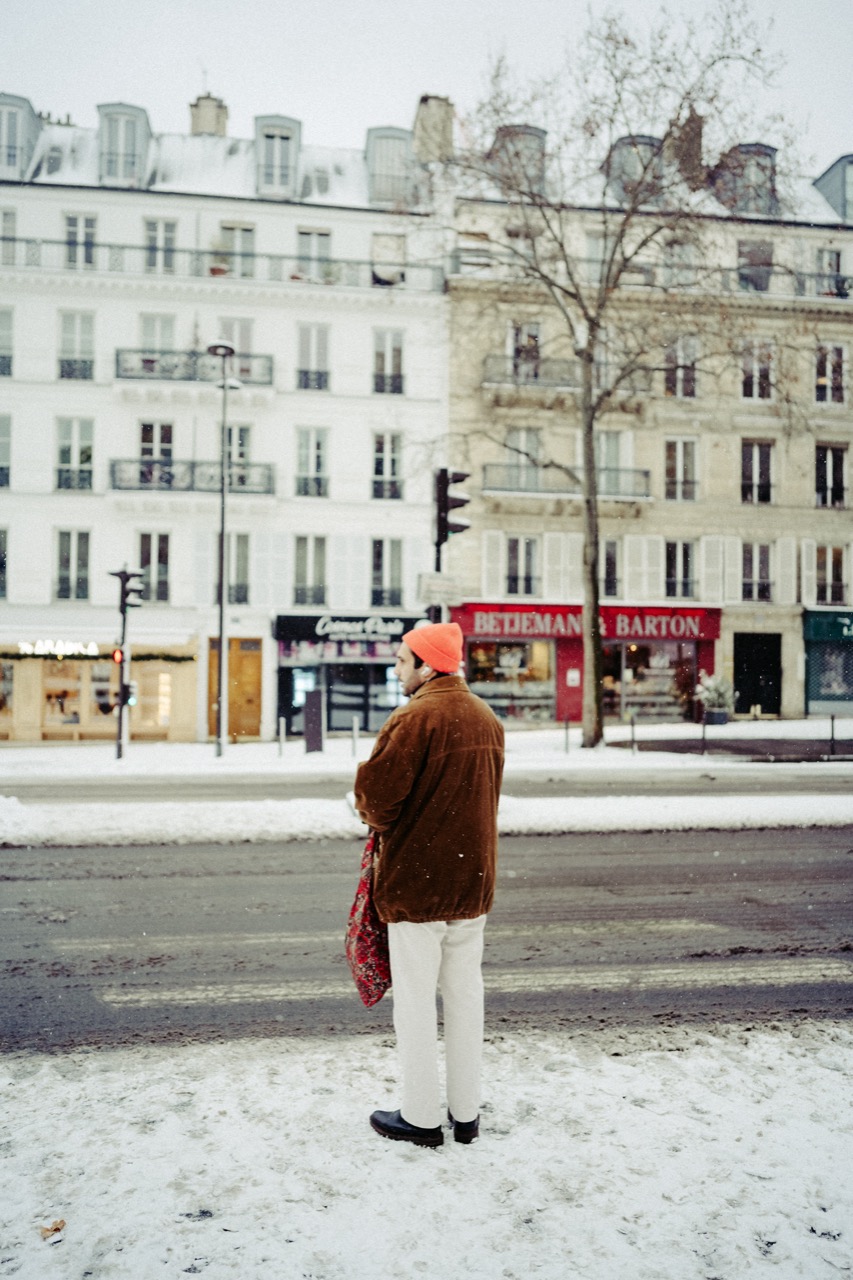
What I remember most is colour against white. An orange knit cap above a corduroy collar. The red flare of a child’s jacket on a grey boulevard. The city had turned monochrome and people were painting it back, one scarf at a time.
Snow does something to a city’s sense of time. Paris in January already moves slowly — the long lunches, the late light — but under snow it nearly stops. You find yourself standing at crossings you don’t need to cross, watching the flakes come down through the glow of a boulangerie window, and the thought occurs that there is nowhere, right now, you need to be.

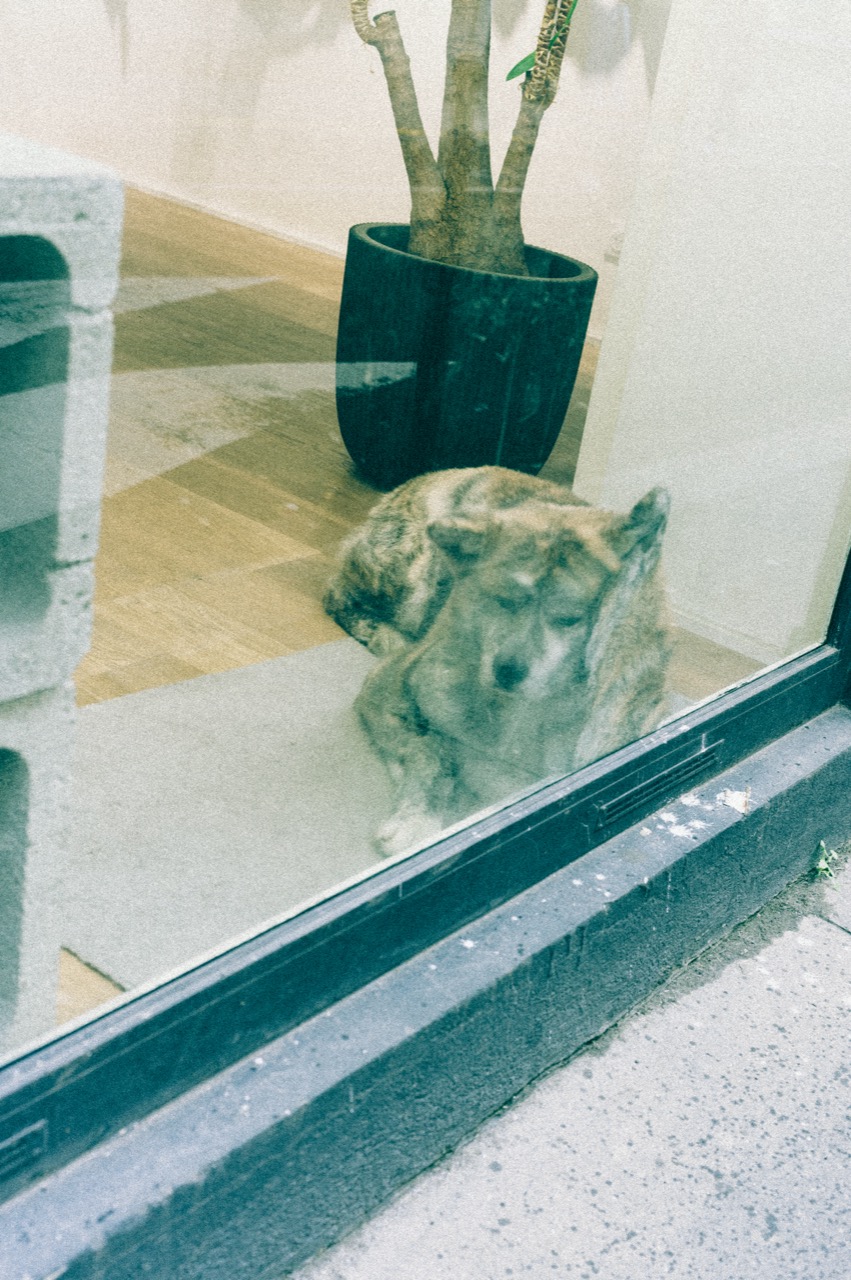
Mornings began at the window. The glass fogged with coffee steam and the street below turned into an aquarelle — figures dissolving at the edges, the pavement a wash of grey and white. I watched a woman walk her dog in a straight line, cutting the first track through fresh snow, and felt the small pleasure of witnessing something no one else would remember.
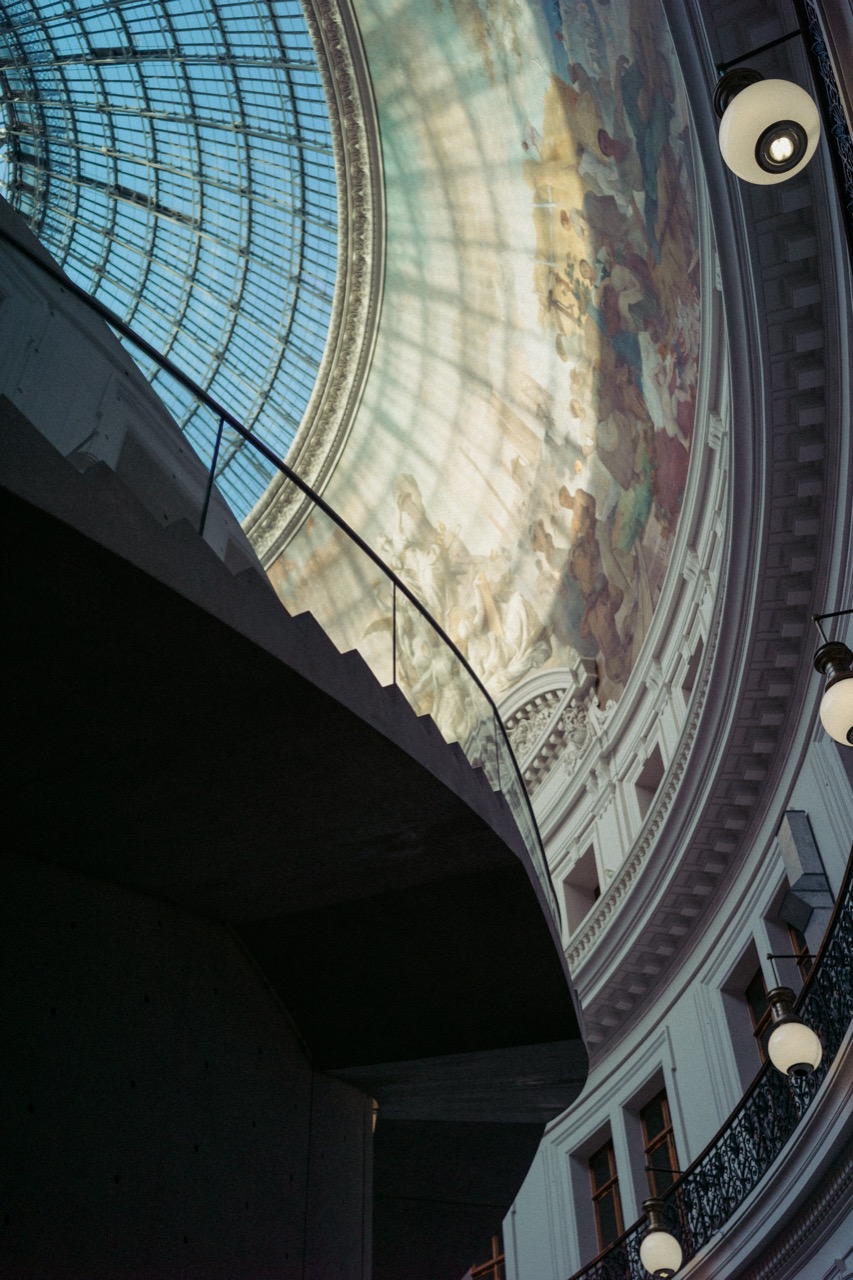
The Bourse de Commerce is a building that contains its own sky. Tadao Ando’s concrete cylinder sits inside a nineteenth-century grain exchange, and above it all, a painted dome opens up like a second atmosphere. You enter from the street and look up, and for a moment you are not in a museum but in the inside of a planet.
Pinault’s eye is cooler than you expect. The works he chooses do not shout; they occupy space with the confidence of furniture that has always been there. A white pyramid on a concrete floor. A web of golden thread suspended in near-darkness, catching light like a thought half-formed.
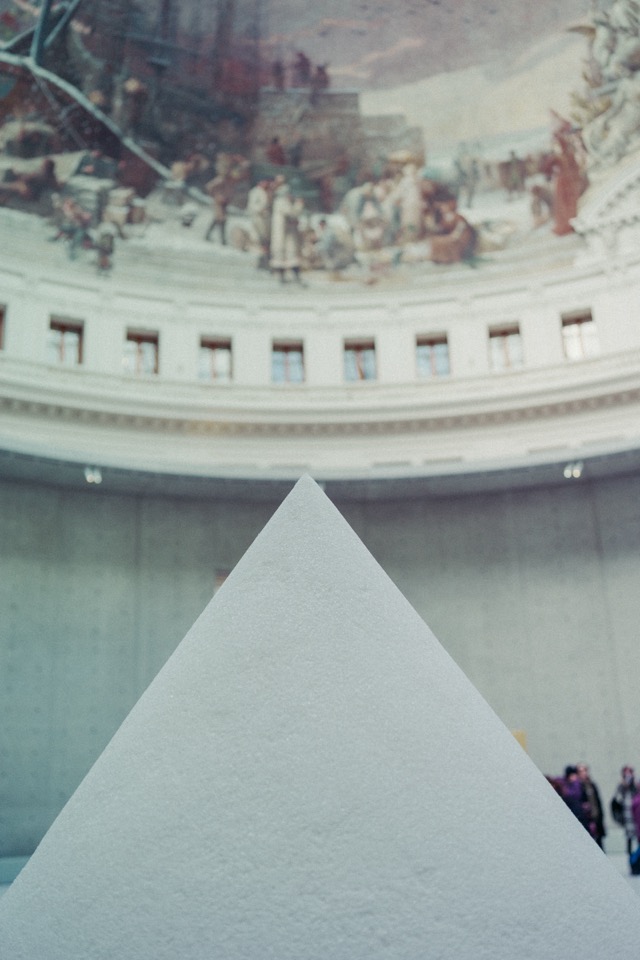
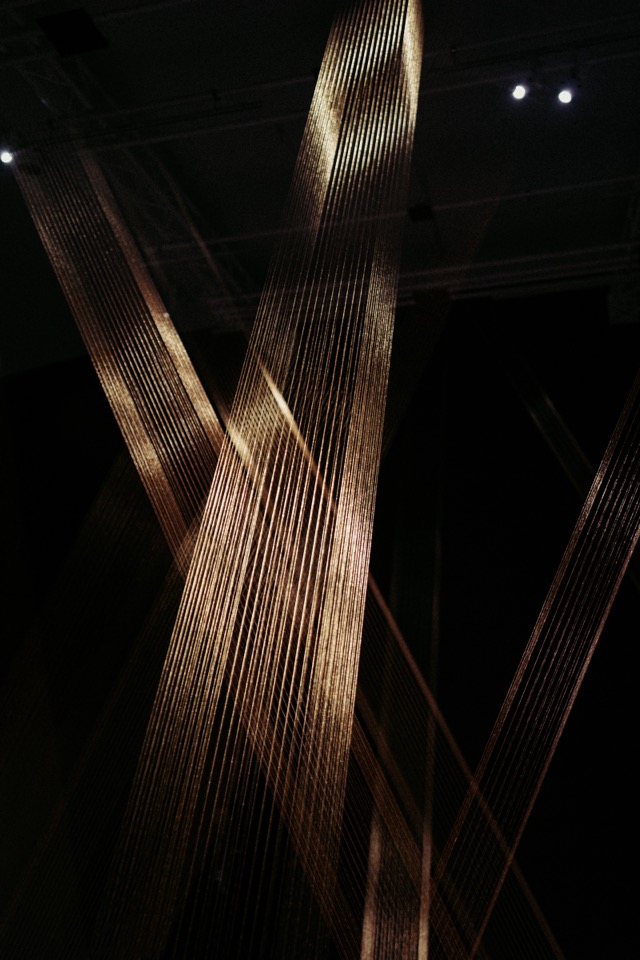
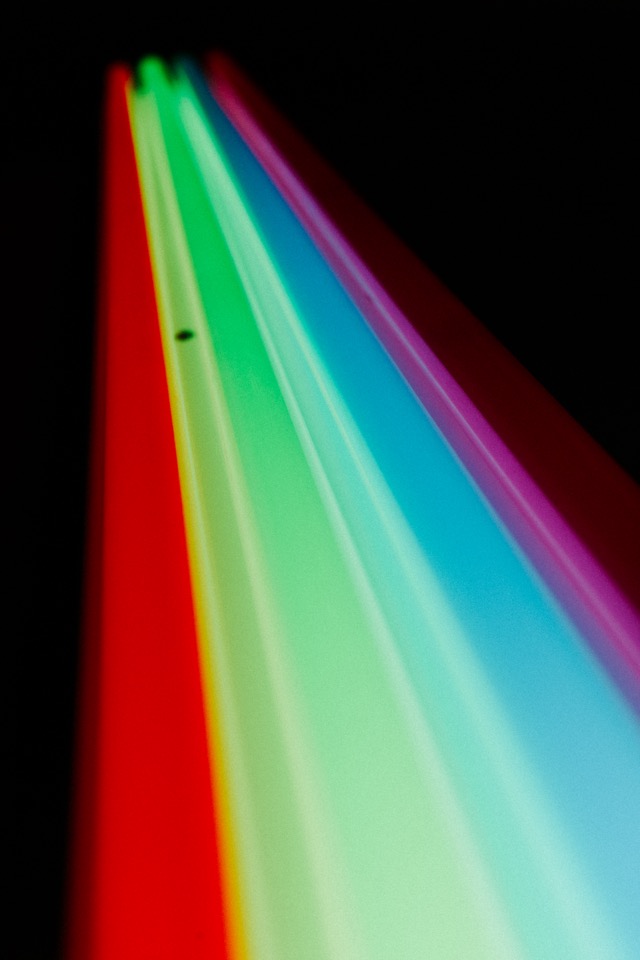
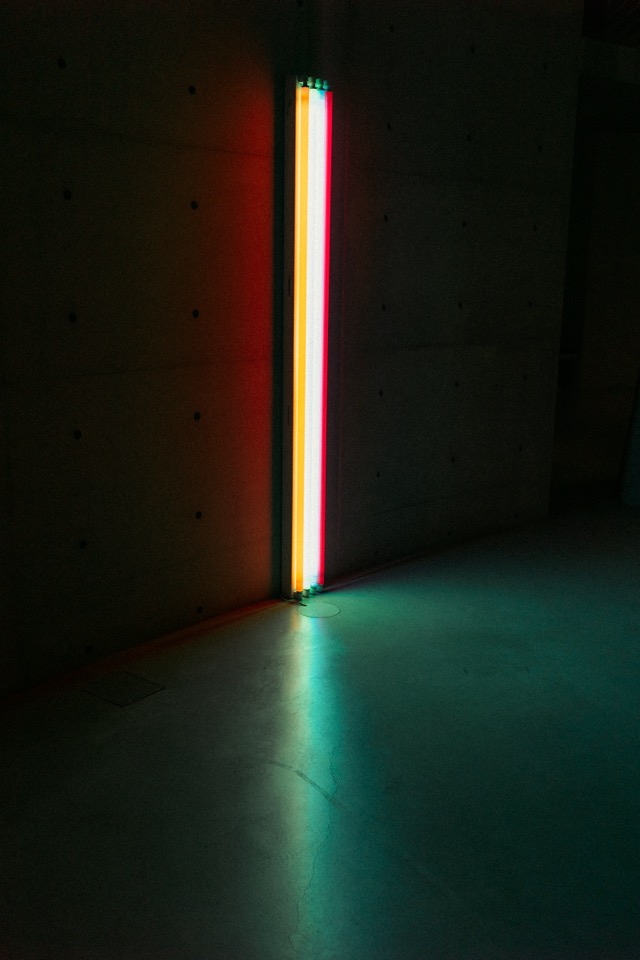
Downstairs, Dan Flavin. Fluorescent tubes angled into corners, splitting white light into its constituent colours. Red bled into magenta bled into blue, and Ando’s concrete walls became screens for a kind of secular aurora. Standing in that light, you understood something about colour that would return later, in front of Richter: that it is never fixed, never final. It is always arriving.
A museum is a place where you practise the art of looking slowly. Snow outside teaches the same lesson.
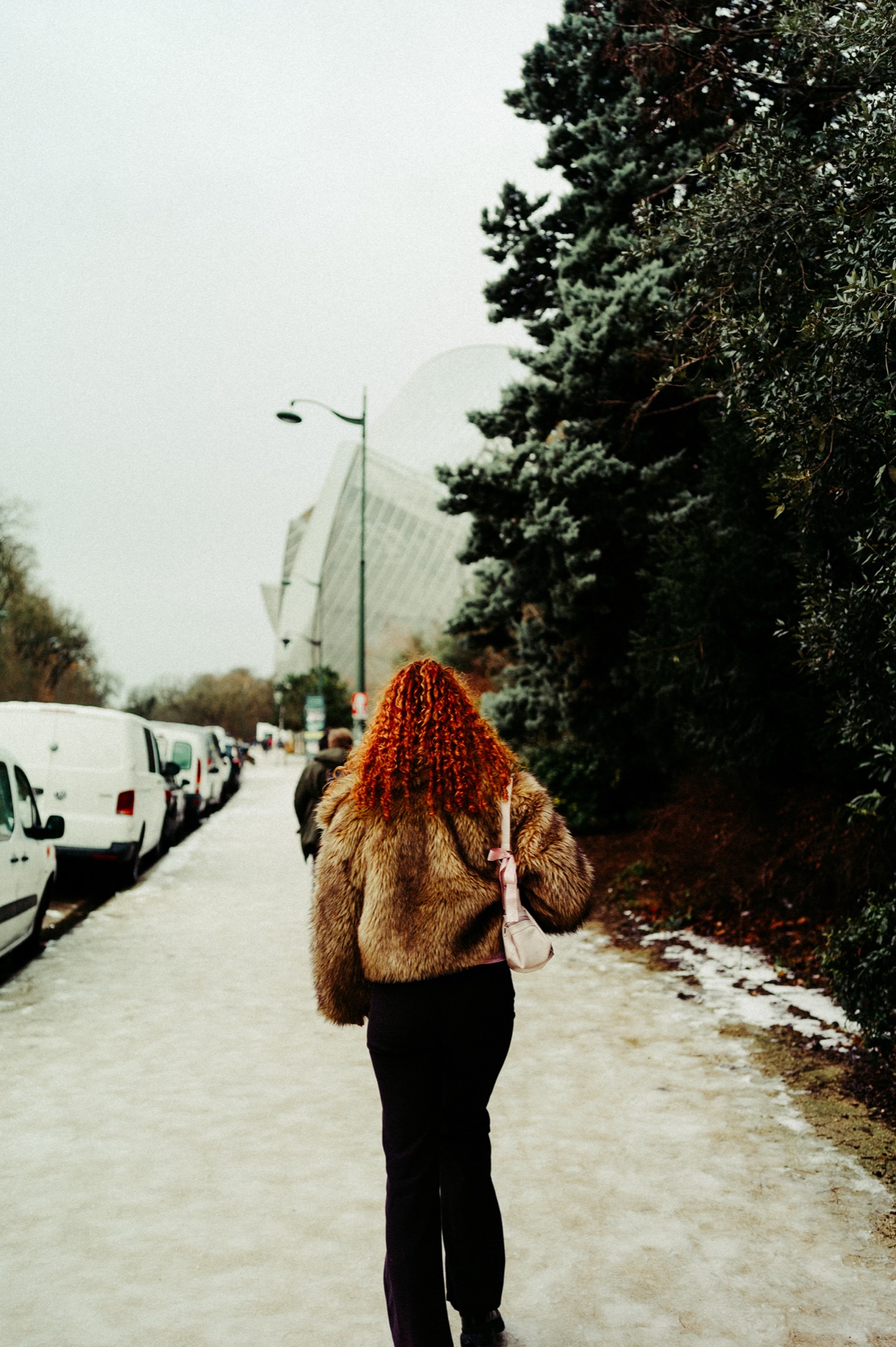
To reach the Fondation Louis Vuitton you cross the Bois de Boulogne, which in snow becomes a forest from a northern European painting. Bare oaks, frozen earth, the occasional jogger bright against the grey. Gehry’s building appears through the trees like something that has landed rather than been built — all glass and steel and improbable geometry.
Inside, Richter. Room after room of him. The early photo-paintings with their deliberate blur, as if memory itself were a lens slightly out of focus. The abstract squeegee works, where colour is not applied but dragged — pulled across the canvas with the blunt authority of a windscreen wiper. And the grey paintings, which are not grey at all but contain every colour, suspended in a state of refusal.
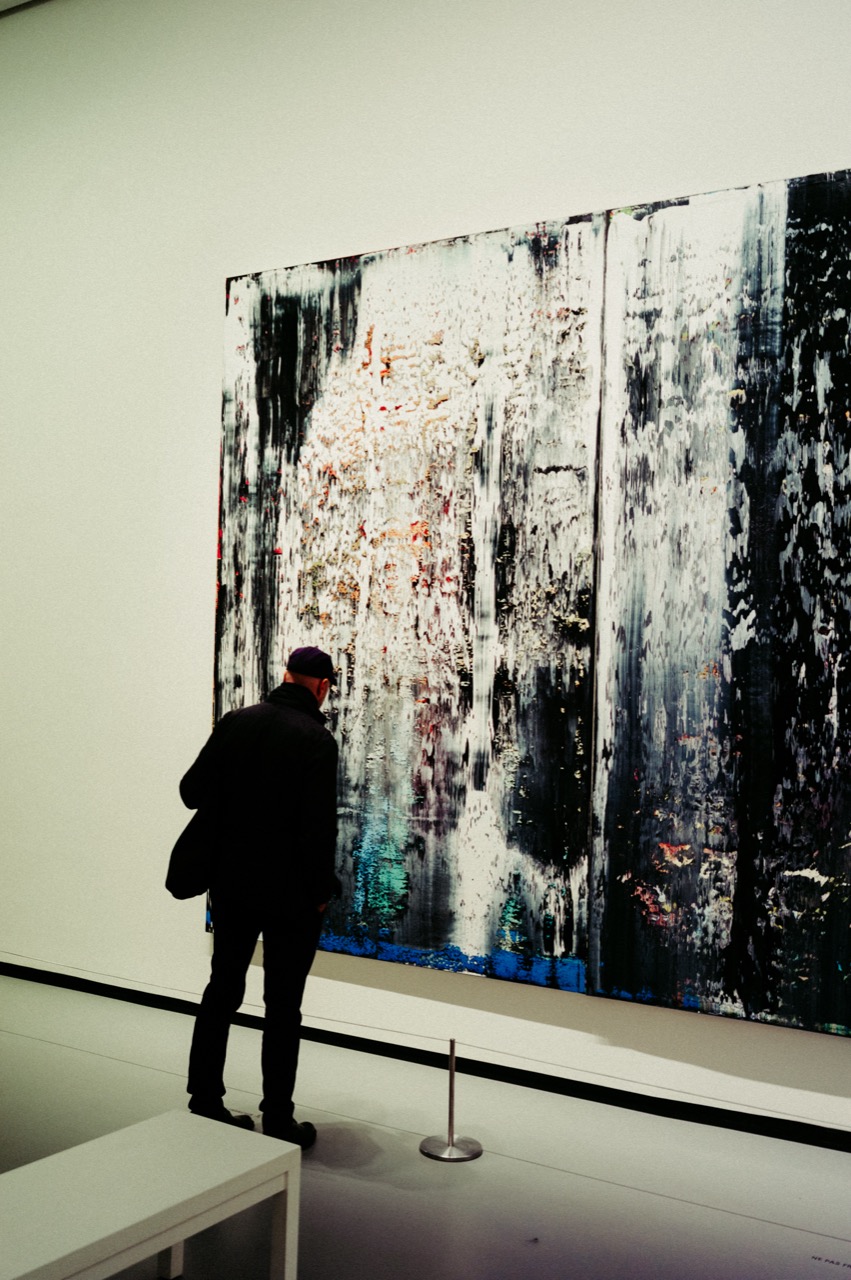
There is a moment in every exhibition when the work stops being about the artist and starts being about you. For me it came in front of one of the large abstracts — a field of red and ochre, scraped and layered until it looked geological. A man stood before it with his hands clasped behind his back, and for a long time neither of us moved. We were doing the same thing: trying to see all of it at once, and failing, and finding that the failure was the point.
By late afternoon the snow had begun to thin. The city reasserted itself — the horns, the heels, the smell of wet wool on the Métro. I walked back through streets that were already turning to slush, watching the light fade behind the rooftops, thinking about Richter’s grey paintings and how they were made of everything.
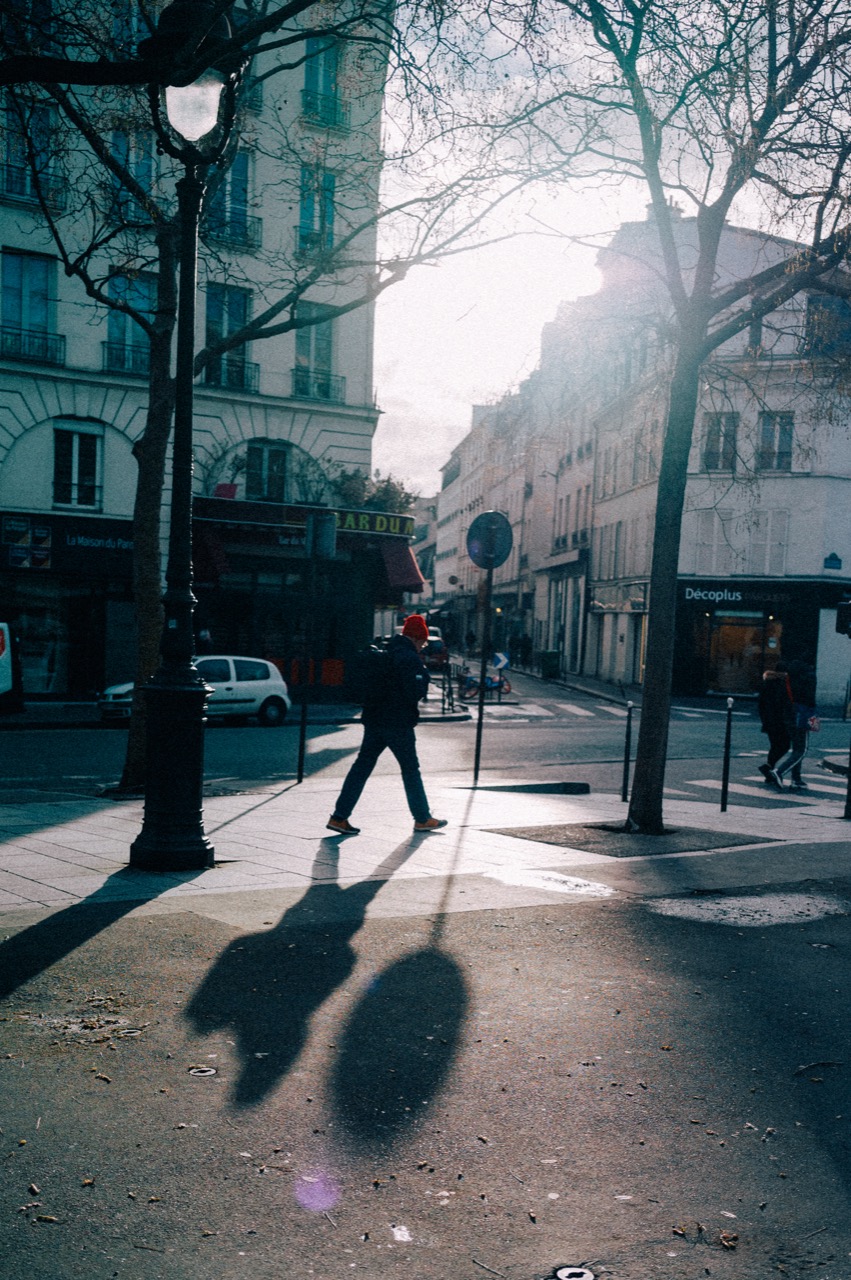
A trip like this leaves no conclusion. You arrive, you look, you walk until your feet hurt, you eat something warm, you look again. The photographs are not souvenirs but residue — what remained on the glass after the window fogged over. They are partial, as all seeing is partial. They will have to do.