
Cormorant Garamond · Light
Snow rewrites the tempo of a city. Paris under clear skies has a rhythm — brisk, argumentative, sure of itself — but Paris under snow forgets all that. Footsteps shorten. Conversations lower. The whole city exhales and moves at the speed of falling flakes, which is to say: barely at all.
I noticed it first at intersections. People waited longer than they needed to. The light would change, and still they stood, looking up or looking down at the patterns forming under their boots. Two figures crossed below my window, unhurried, leaving tracks that would last an hour before the next pair of feet erased them. Everything felt provisional and therefore precious.
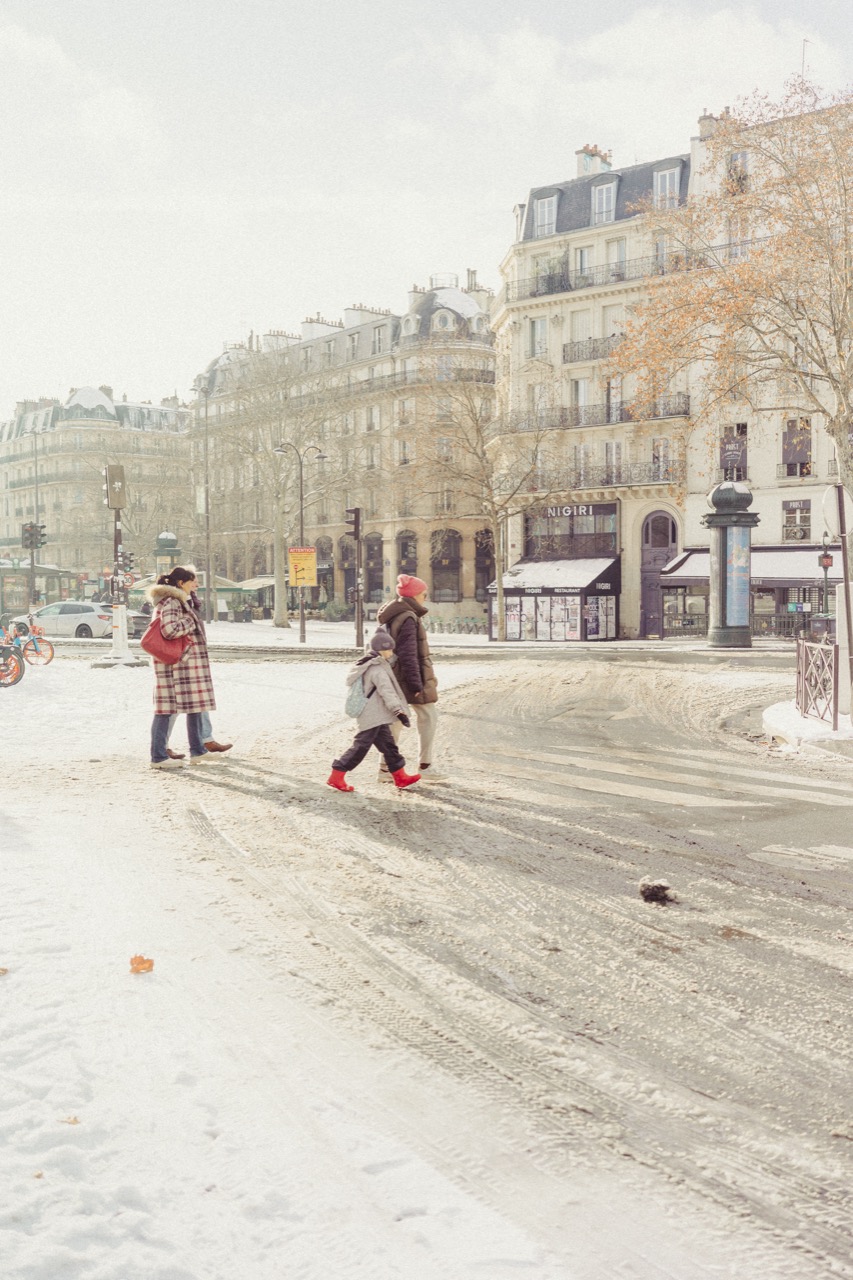
A parent and child crossed ahead of me on a wide boulevard, the child half-running, the parent keeping pace with the particular calm of someone who has learned that children will stop when they stop. The Haussmann facades behind them were the colour of old paper. Against all that grey, the two of them were the only moving thing, and for a moment the city felt like a snow globe — sealed, still, arranged for looking at.

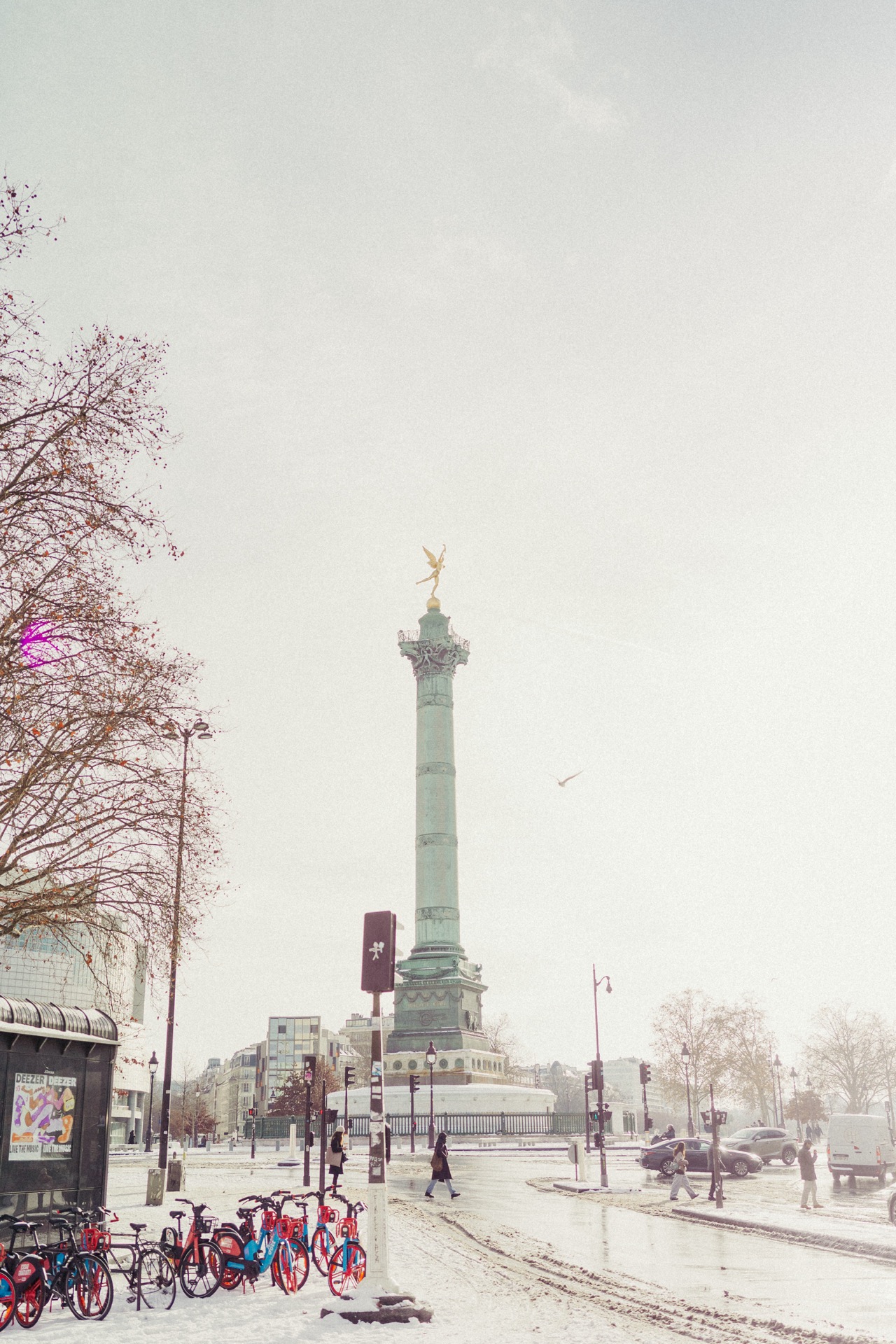
At the Bastille the July Column rose into white sky, its golden angel barely visible. Below, a row of bike-share bikes sat locked in their docks, their frames collecting snow in thin lines along every tube and cable. Turquoise, green, grey — the colours looked louder than they had any right to, as bright things always do when the world around them has gone quiet.
Snow is a recording surface. Every wheel, every foot, every pigeon leaves a mark, and for the length of a winter morning those marks accumulate into a language you can almost read. Bicycle tyres wrote long cursive lines along the gutters. Crow footprints branched across a bench like calligraphy — three-toed, deliberate, a script with no translation.
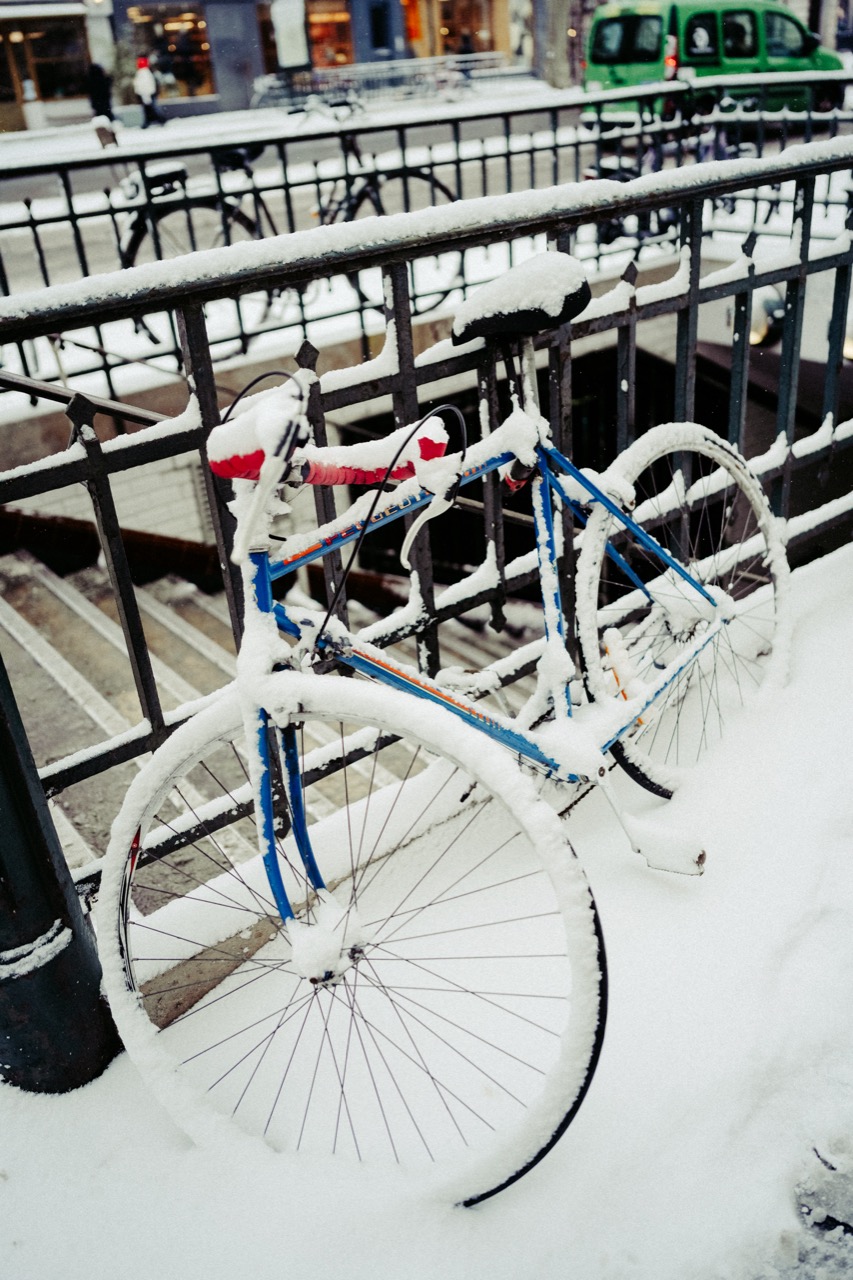
A road bike stood chained to a metro railing, its saddle holding a small dome of snow, its thin tyres disappearing into the white below. Whoever left it here last night would return to find it transformed — less a vehicle than a sculpture, every spoke outlined, every cable traced in white. I liked the idea that the cold had made it more visible, not less. That the snow had drawn attention to its shape by covering it.
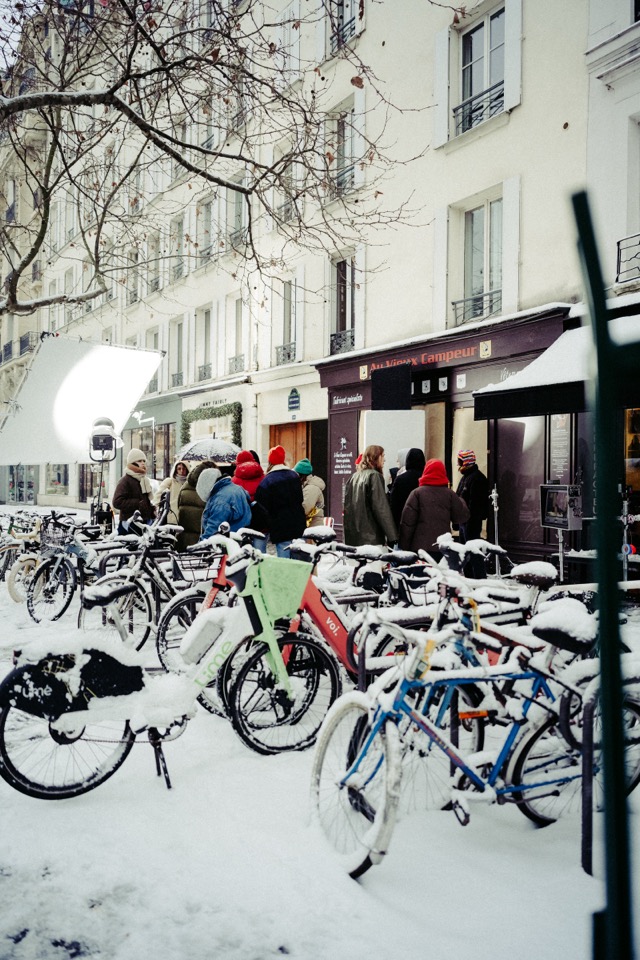

Snow does not silence a city. It edits it — removes the noise, keeps the melody.
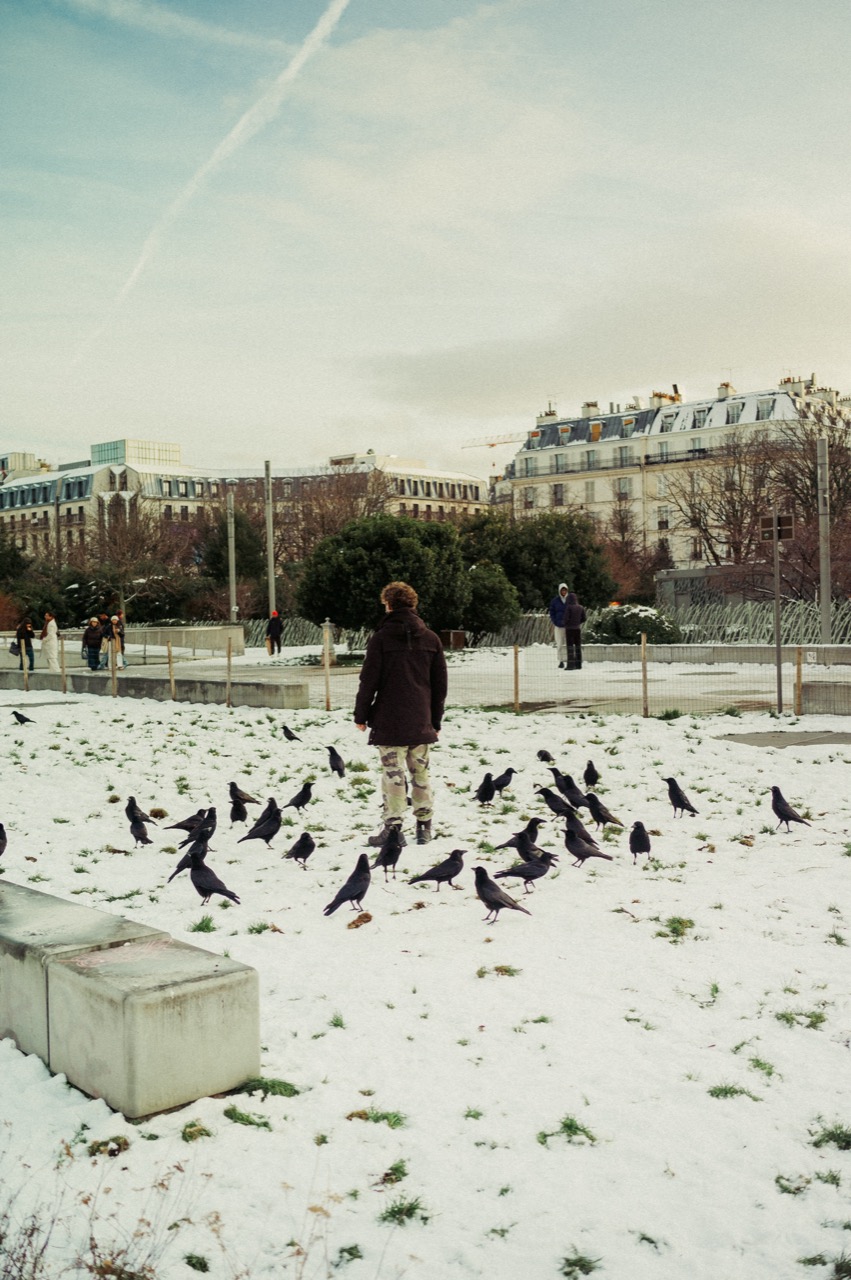
The crows were the most at ease. They walked through the snow as if they had ordered it — pecking, pausing, leaving their small forked signatures on every surface. A man stood nearby, watching them or watching nothing, his silhouette dark against the white field. Neither party seemed troubled by the cold. Both seemed to be waiting for the same thing, though I could not say what.
There is a particular pleasure in watching snow from a high window. You become the audience for a performance no one knows they are giving. Below, a parent walked with a child again — different people this time, same choreography. The child ran ahead, stopped, turned. The parent followed. They left two sets of tracks that told the whole story of the morning: one line straight and measured, the other a scribble.

The bakery queue told a different story. Even in freezing weather, the line formed at seven-thirty and held until ten. People stamped their feet and blew into their hands and talked to strangers they would never speak to on a dry day. The boulangerie is a social ritual that survives everything — strikes, rain, snow. Perhaps especially snow. The cold makes the bread smell sharper, the warmth behind the glass door more magnetic. You join the queue not just for a baguette but for the brief communion of waiting together in the cold, shoulder to shoulder with people who have also decided that bread is worth suffering for.
If snow is silence, the marché is its opposite. I walked in from the white street and the world changed registers immediately — voices layering over voices, the slap of a fish on paper, a vendor calling prices for clémentines in a voice that could fill a theatre. Colour returned all at once: the acid yellow of lemons, the impossible orange of stacked mandarins, the dusty purple of figs that should not exist in January but do, because Paris insists on it.
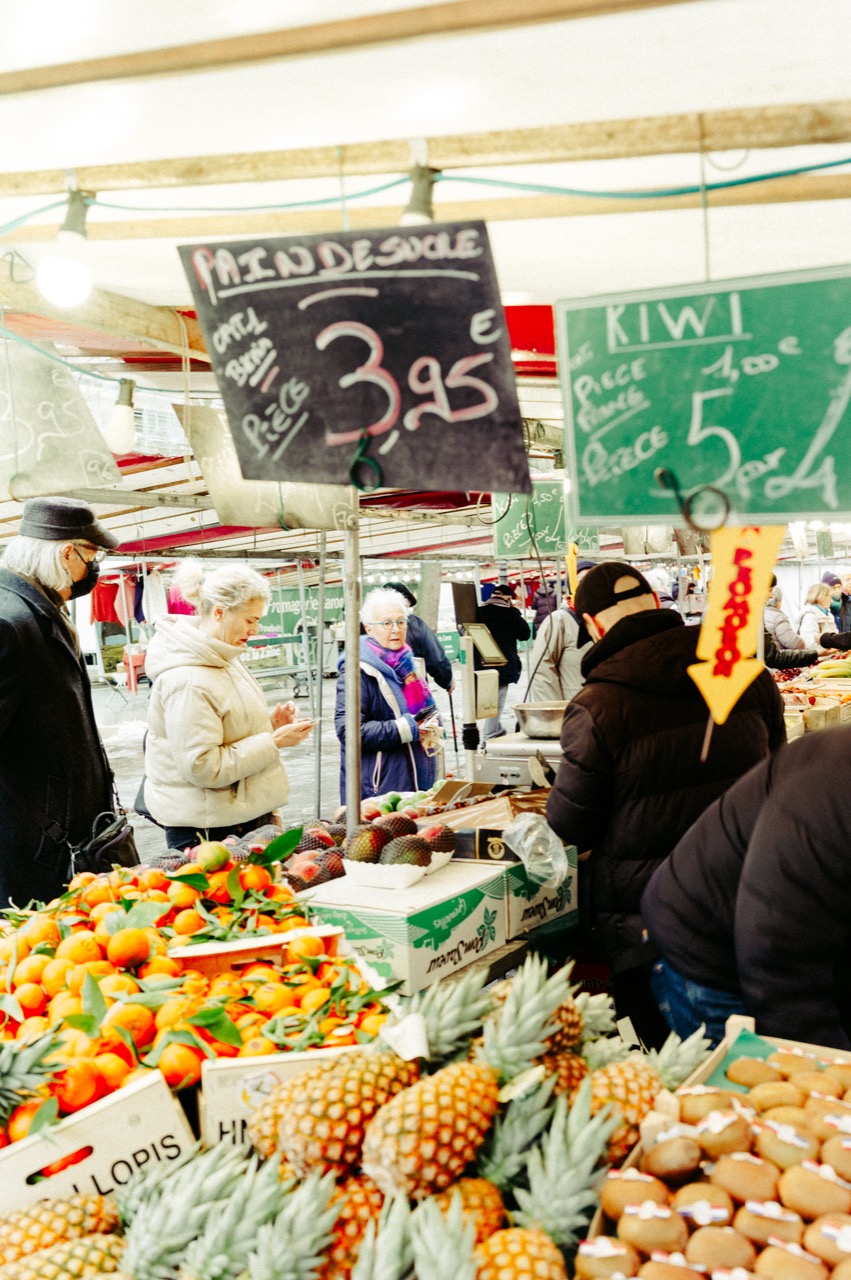
The pineapples sat in a rough pyramid, their crowns still green, their skins patterned like something between reptile and geometry. Next to them, oranges in a crate, each one slightly different in shade, arranged by no one yet somehow perfect. The stall was a rebuttal to winter — proof that somewhere, not far away, there were trees bending under the weight of fruit, and warmth, and a sun that did not set at four o’clock.
By afternoon the sun broke through. Low and lateral, the kind of winter light that turns everything into a stage set. Shadows stretched to three times the length of the bodies that cast them. Every figure on the street became an elongated version of itself, walking beside its own dark double.
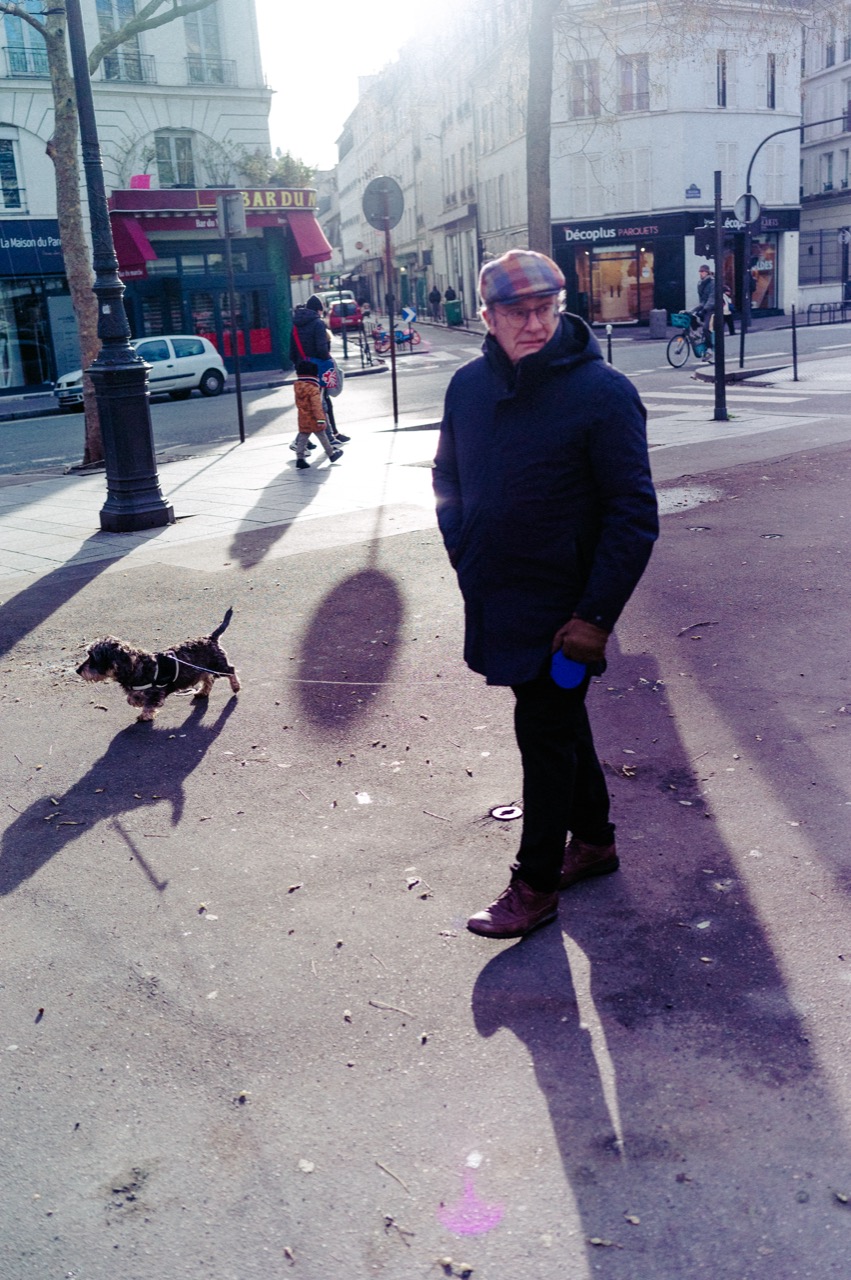
An older gentleman walked his dog through a pool of backlight, both of them glowing at the edges. His shadow ran ahead of him by ten metres, thin and precise, a preview of the evening to come. The dog’s shadow was shorter and rounder and moved with its own logic, occasionally merging with his, occasionally breaking free. There is a poetry in winter shadows that summer cannot match — they are longer, sharper, more theatrical. They insist on being seen.
I thought about how a photograph is itself a kind of shadow. Light hits a surface, and what remains is the record of what stood in the way. Every picture in this journal is an obstruction — a moment that blocked the light long enough to leave a mark.
A photograph is a shadow that outlasts the thing that cast it.
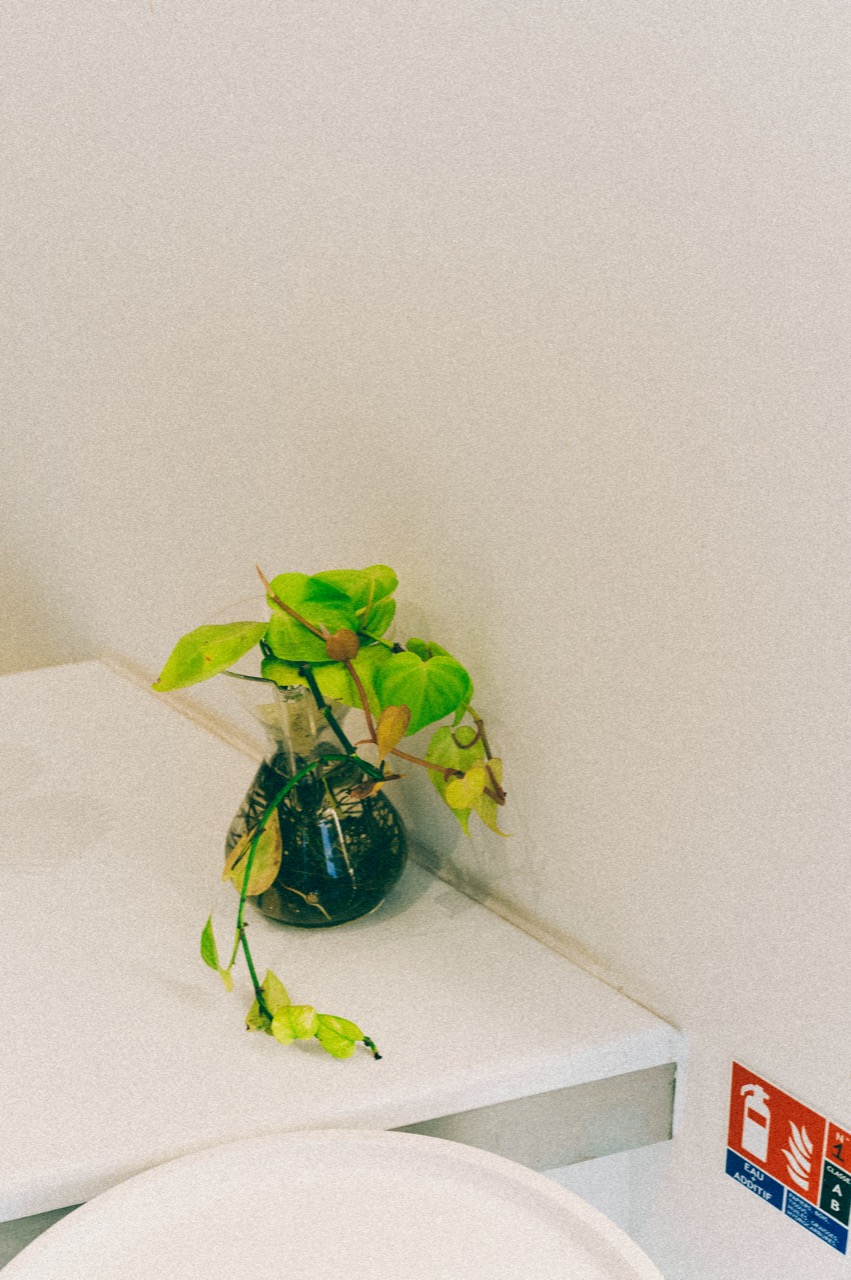
The day ended as days in winter do — early, without announcement. The light withdrew from the room in stages, and the small plant on the table by the window was the last thing it touched. For a few minutes its leaves held the glow, and then that too was gone, and the snow outside turned blue, and it was evening.