Cormorant Garamond · Light
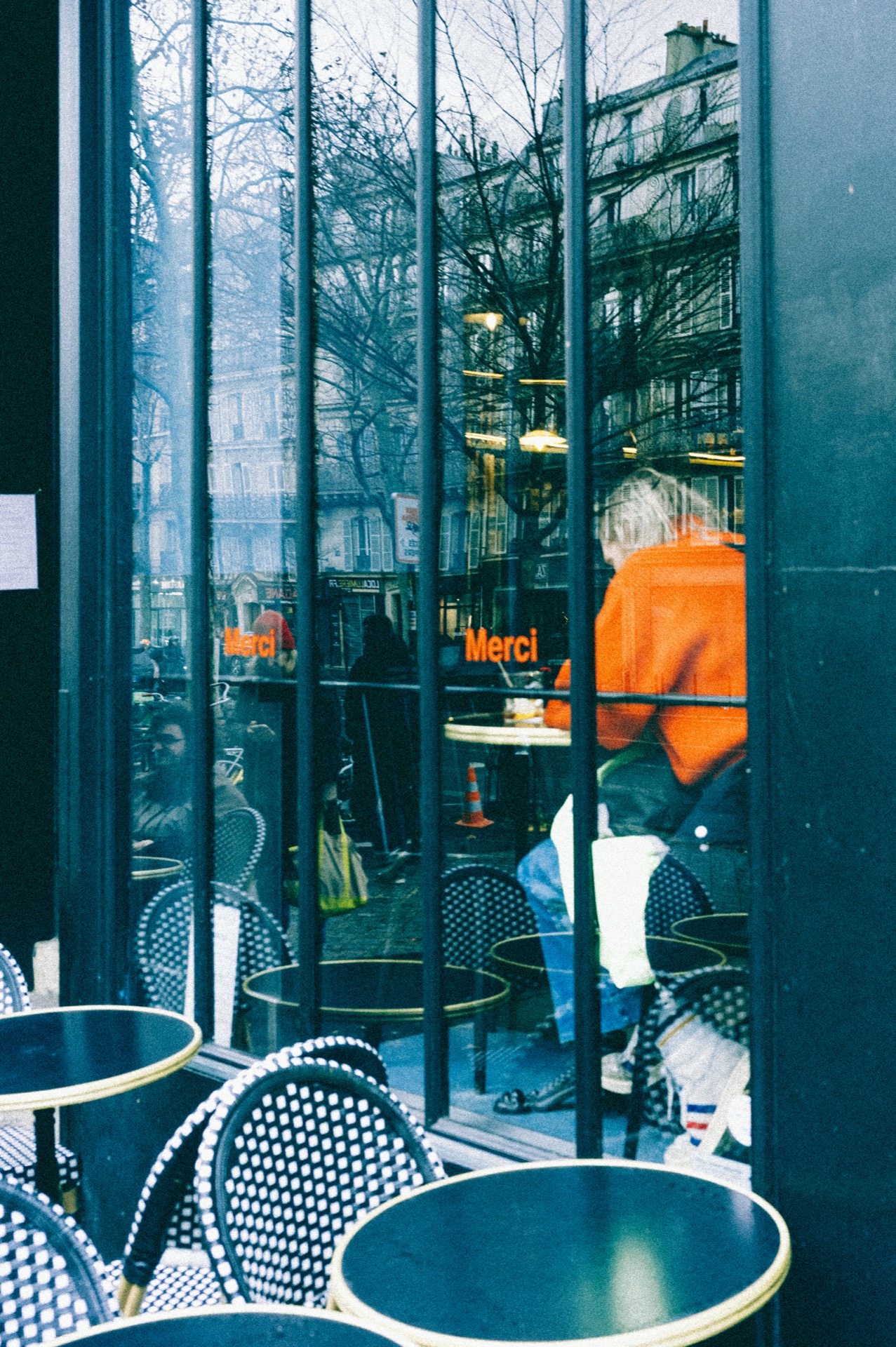
Paris is a city that talks through its surfaces. Not through screens or broadcasts but through stone, paint, glass, and bark — through the things you touch with your eyes as you walk. Every wall is a palimpsest. Every pavement is a page. The city has been writing on itself for centuries, and if you slow down enough, you start to read it.
This is the second walk. The snow has mostly gone. What remains is the architecture of communication — the painted letters, the mosaic tiles, the imperative verbs pressed into asphalt. I came looking for galleries and found that the whole city is one.

French signage speaks in imperatives. Priorité. Défense de. Pousser. The language of the street is not a suggestion but a command — civic, blunt, and strangely beautiful when stencilled in fading white paint on dark asphalt. There is a typography to obedience. The letters are sans-serif and loud. They do not ask to be admired; they ask to be followed.
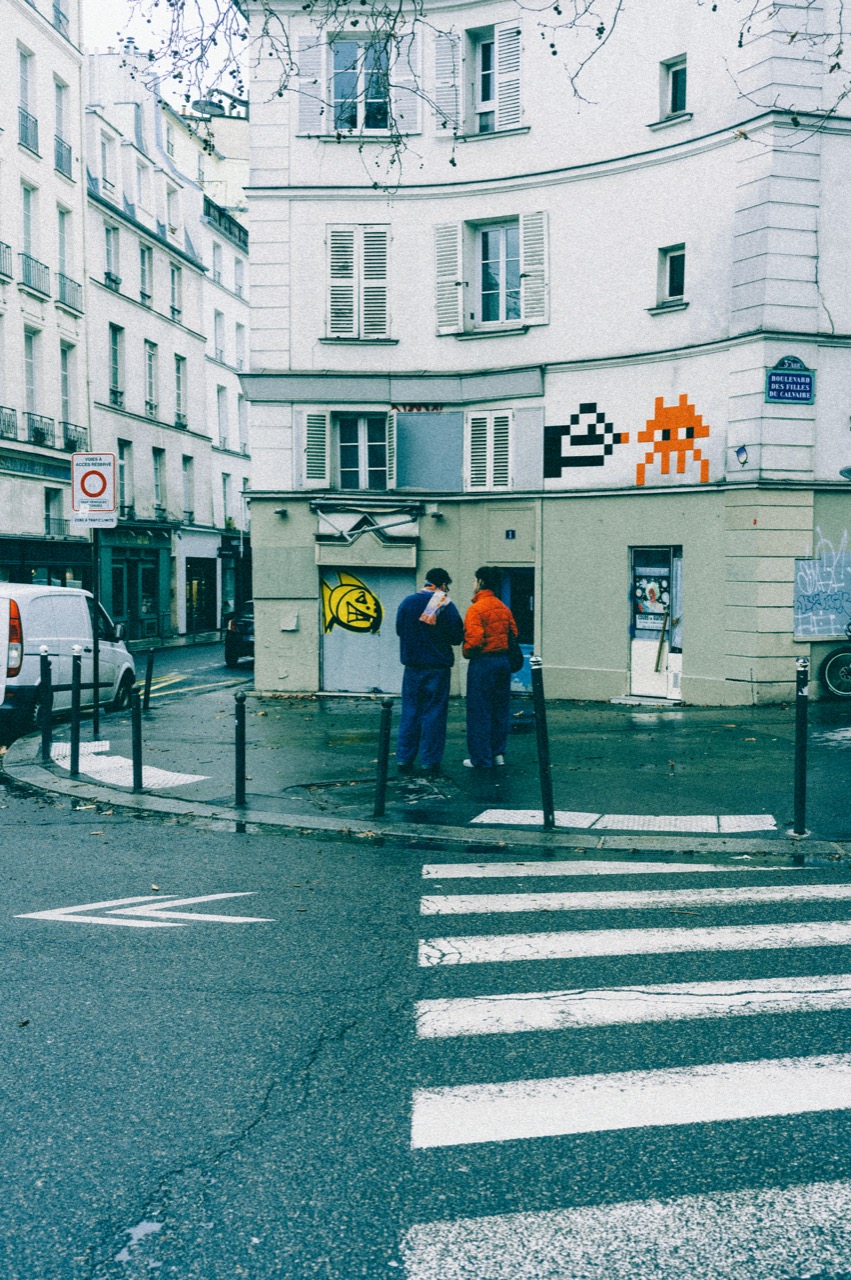
Invader’s mosaics are everywhere in Paris if you know where to look — and invisible if you don’t. Small grids of coloured tile pressed into corners, above doorframes, on the flanks of buildings nobody photographs. They are art that refuses the gallery. No plaque, no price, no opening night. Just a quiet act of placement, repeated across the city like a sentence written one word at a time over twenty years.
I find them comforting. In a city saturated with named things — named streets, named buildings, named designers — the mosaics belong to no one. They are gifts left at altitude, asking nothing in return except that you look up.
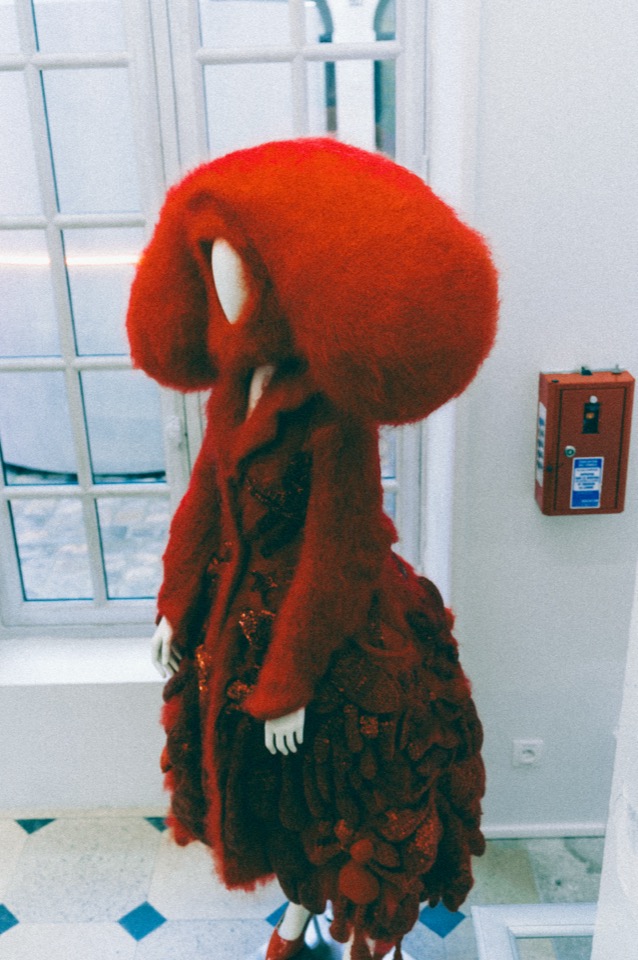
In a window on a quiet street, a red sculptural headpiece sat on a faceless mannequin. Not a hat — a structure. Folded fabric held in tension, like origami that had learned to breathe. Fashion in Paris often crosses the line into sculpture, and the best of it stays on that line, balancing between something you could wear and something you could only look at.
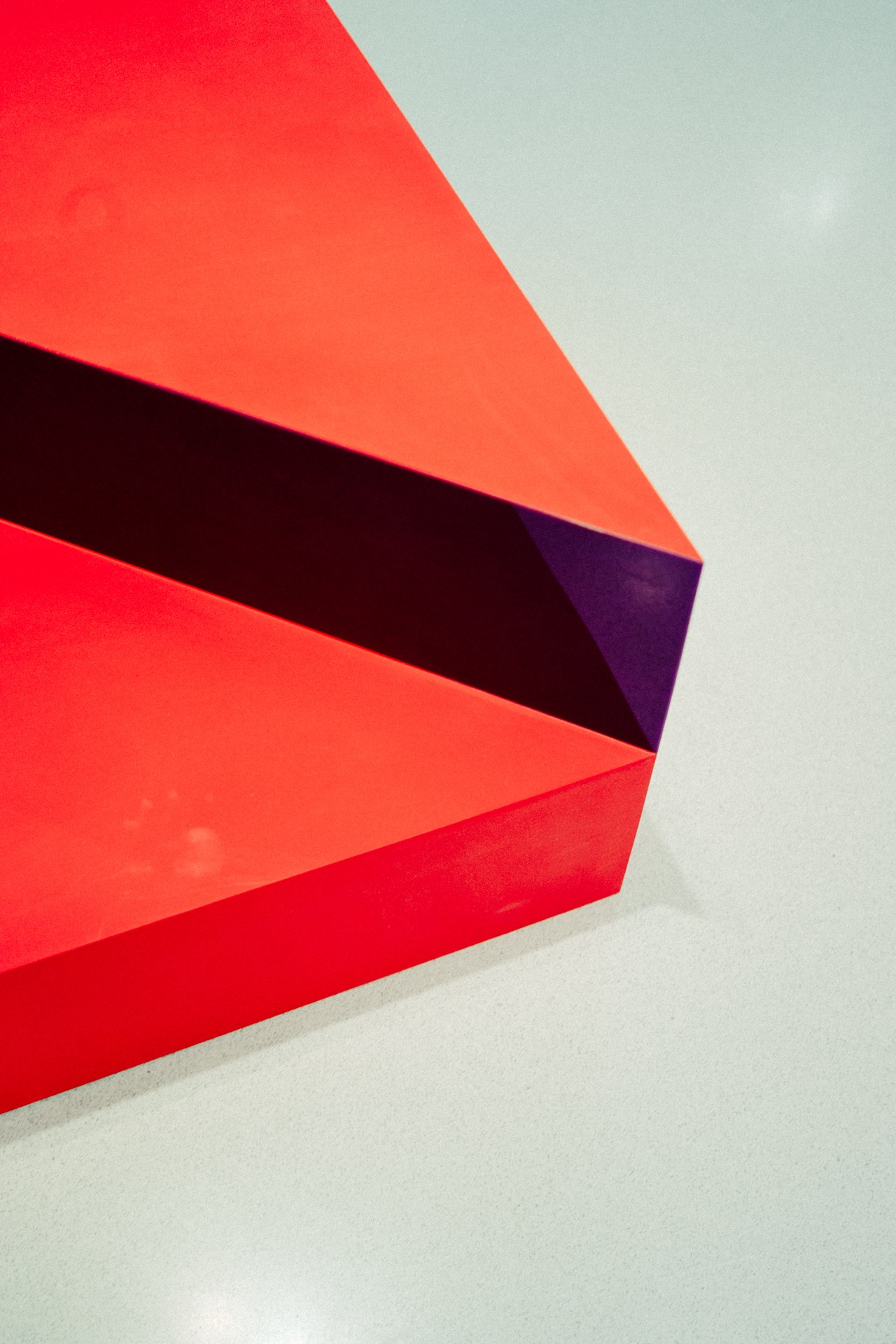
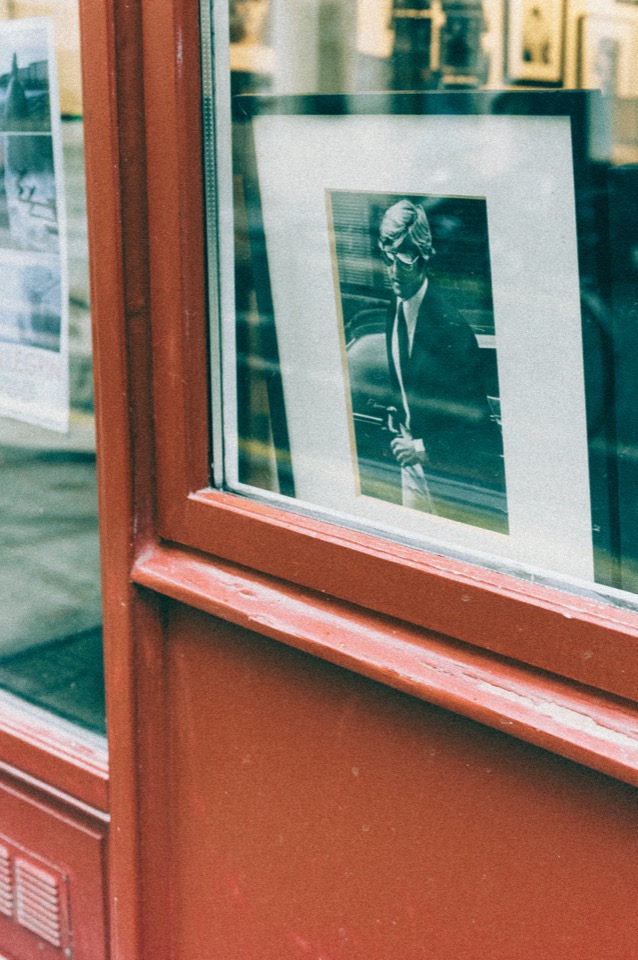
Red keeps appearing. A folded geometric form in a gallery window, precise and improbable. The colour pulls you across the street before you understand why. Red in Paris is not decorative. It is a signal — the city’s way of marking the things that matter: exits, dangers, desires.
A city’s design culture is legible in its shop fronts. Not in the merchandise but in the lettering, the spacing, the ratio of glass to wall. Paris understands negative space the way some cities understand neon — instinctively, as a native grammar.
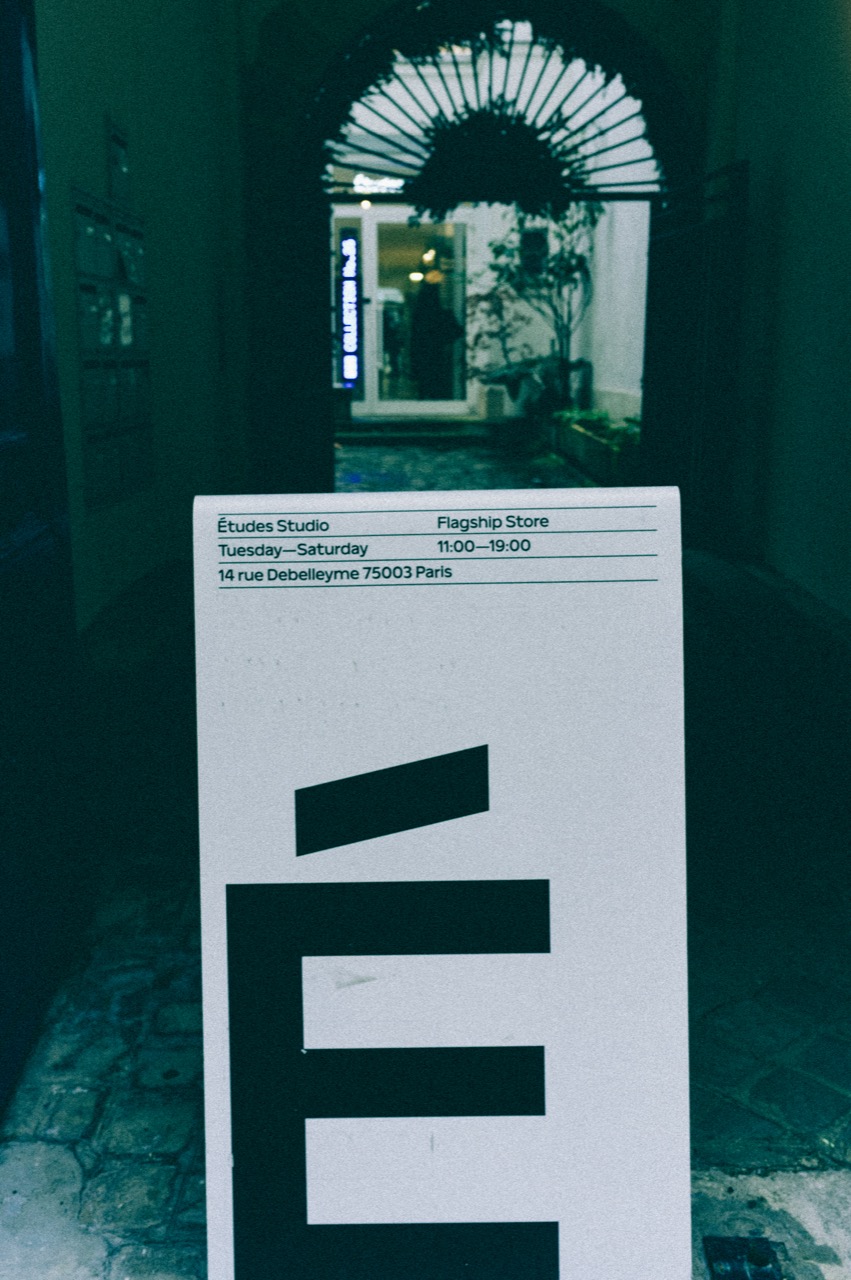
Études Studio: the name says everything. Studies. Not a finished statement but a process, offered as a brand. The sign is clean, wide-tracked, without ornament. The clothes inside follow the same logic — restrained cuts, muted palettes, the kind of design that whispers its intelligence rather than announcing it.
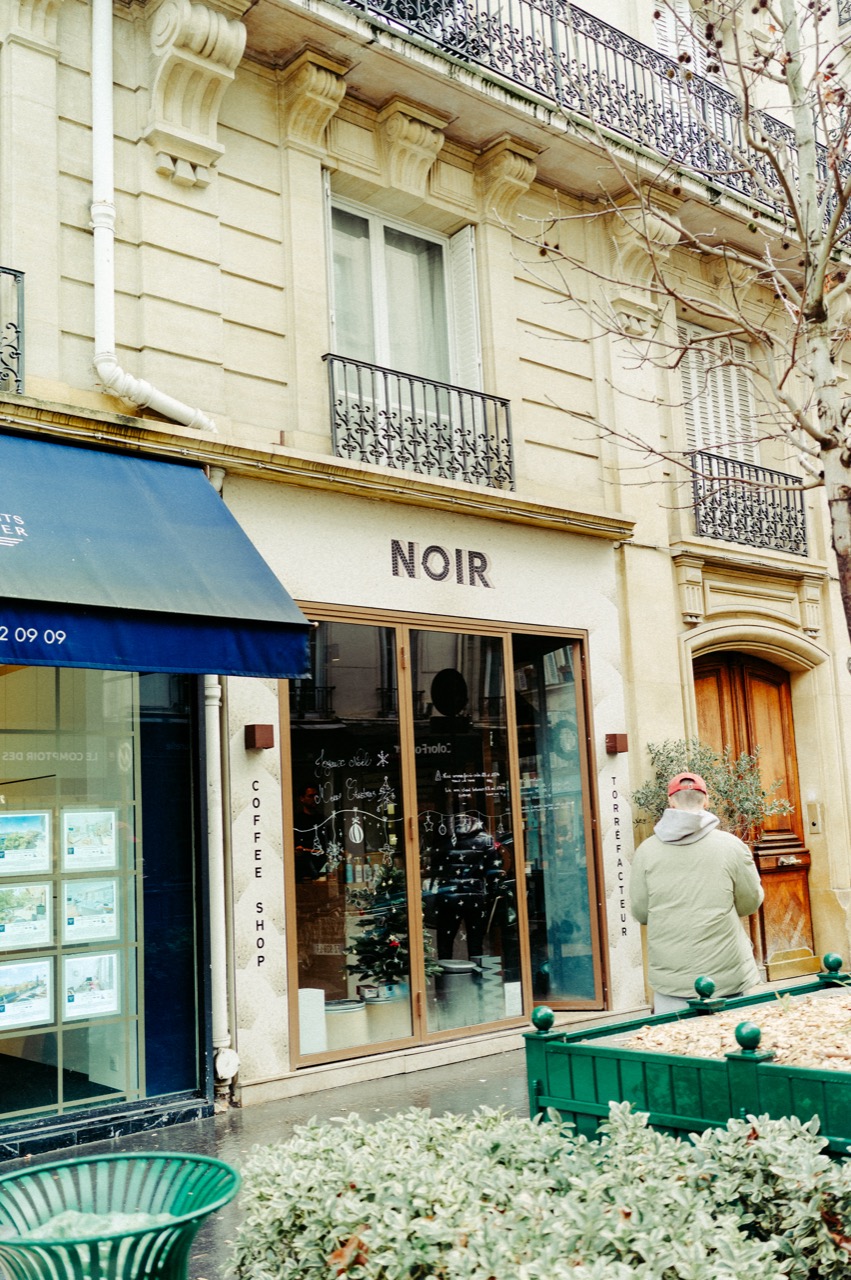
A few streets away, a coffee shop called NOIR. The name is the entire design. Black facade, white letters, nothing else. In a city where every café competes with a century of predecessors, the boldest move is reduction. Say less. Mean more. Pour the coffee black.
A surface is not a barrier. It is an invitation — the first sentence of a longer conversation between the city and anyone willing to read it.
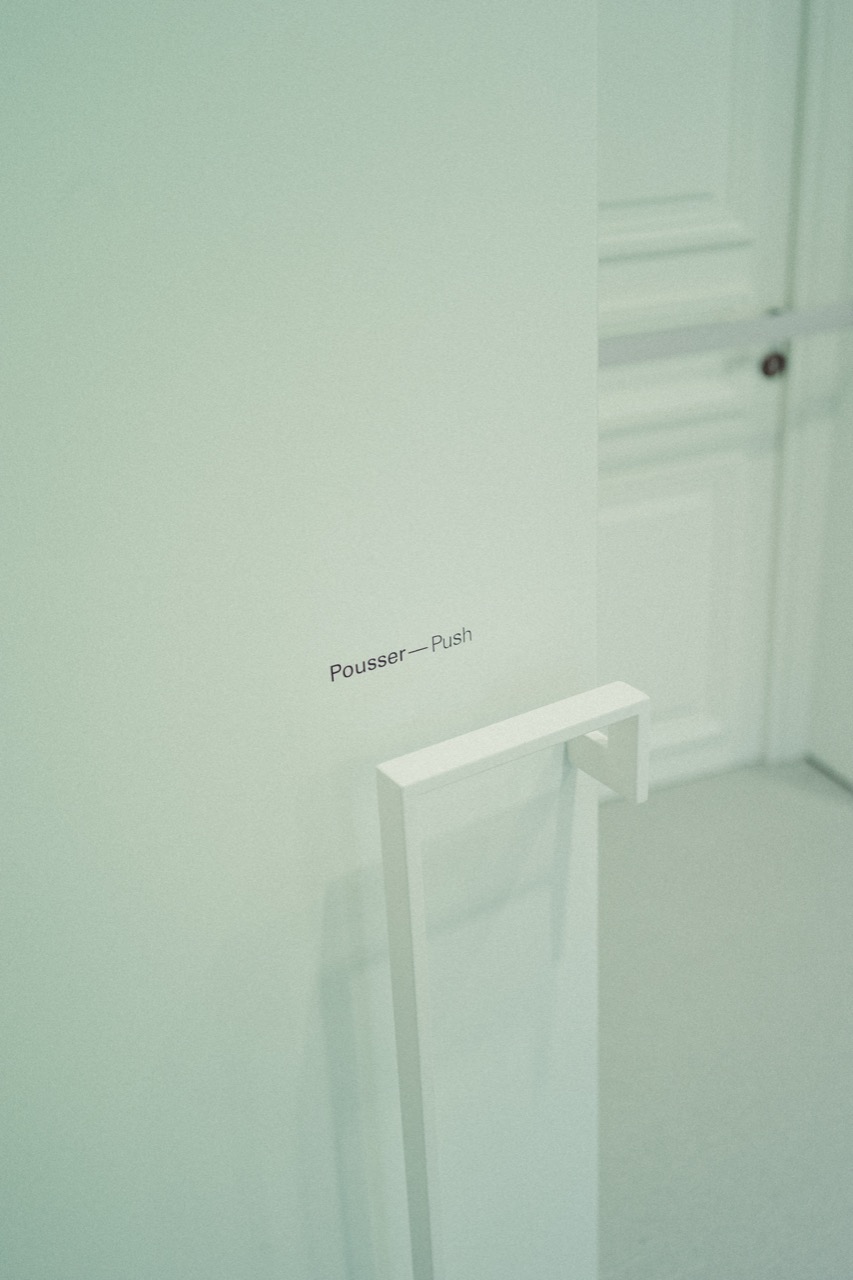
What you notice, walking slowly, is the material register of the city. Haussmann’s limestone, chalky and warm. The flaking paint on a courtyard wall where generations of colour show through in strata — cream over green over something that might once have been blue. Glass so clean it disappears, leaving only the word printed on it: Pousser. Push. A minimal instruction on a minimal door.
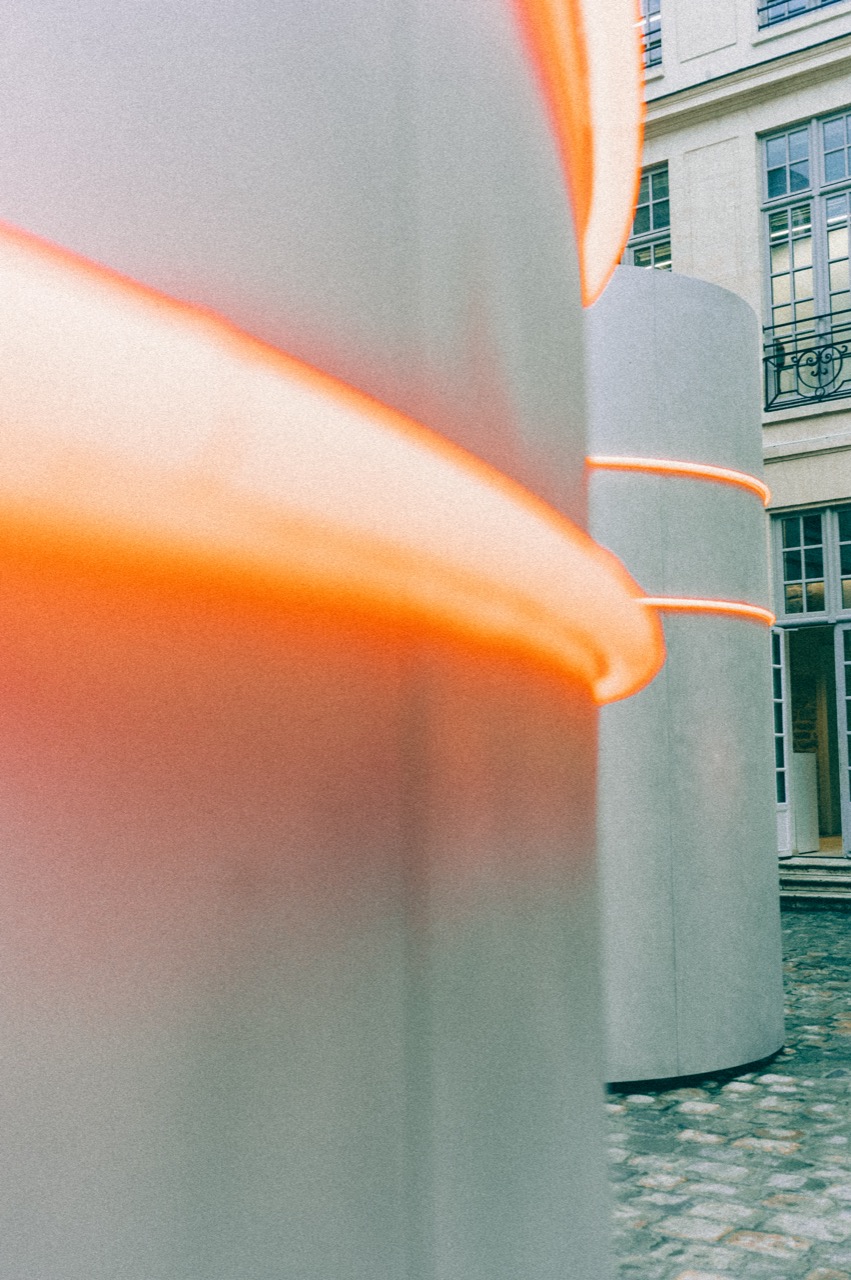
In a courtyard off a side street, an orange cylinder glowed quietly. An art installation, probably, though there was no label. It sat among the old stone like a word from another language dropped into a familiar sentence. The light it cast was warm and specific — the colour of a kiln, or a lantern seen through fog. People walked past without stopping. The piece did not mind.
And then the organic surfaces. Tree bark in Paris carries its own archaeology. The platanes along the boulevards shed their outer skin in patches, revealing pale underlayers that look almost drawn. Someone had noticed this — had seen in the smooth exposed wood a surface that asked for a face. A few lines, two eyes, a mouth. Not vandalism but recognition: the tree was already almost a portrait. The hand just finished what the bark began.
