Cormorant Garamond · Light
A museum is a machine for seeing. Not for storing, not for preserving — for seeing. The walls dictate the distance. The ceiling governs the light. The doorway decides what you encounter next. Before any artwork enters the room, the architecture has already shaped how you will look at it.
This is what I kept thinking in Paris, moving between buildings that could not have been more different in their ideas about looking — and yet each one, in its own way, was a kind of lens.
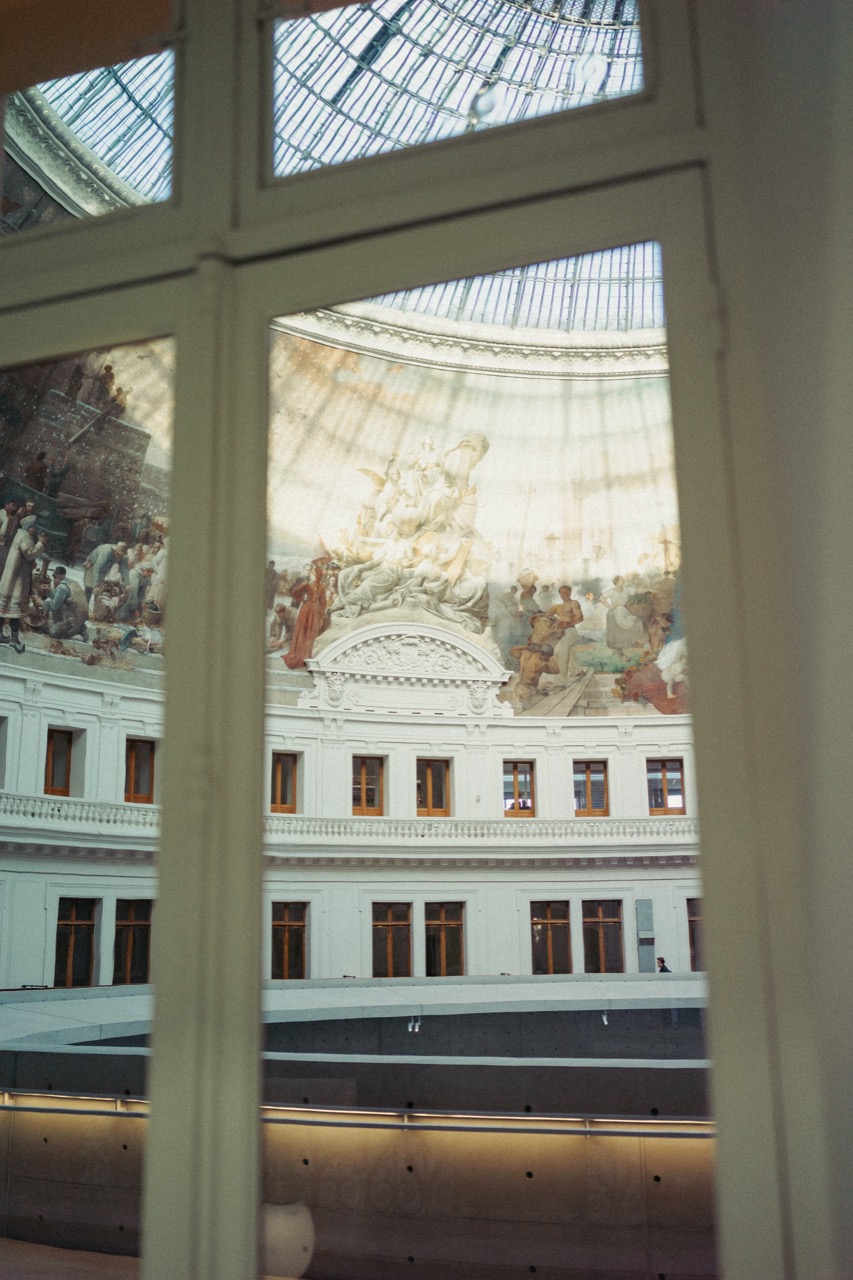
Through a window on the upper level, the dome appears again — but now it is a picture inside a picture, framed by the mullions, flattened by the glass. The building keeps offering you views of itself, as if it knows that every angle is a different building entirely.
I began to notice red. Not in the paintings — on the people. A woman in a crimson shawl pausing before a canvas. Two figures in scarlet coats, blurred at the edge of focus, leaning toward the same image. The gallery visitors were unconsciously echoing the palette on the walls, as if the colour had leaked from the frame and landed on their shoulders.
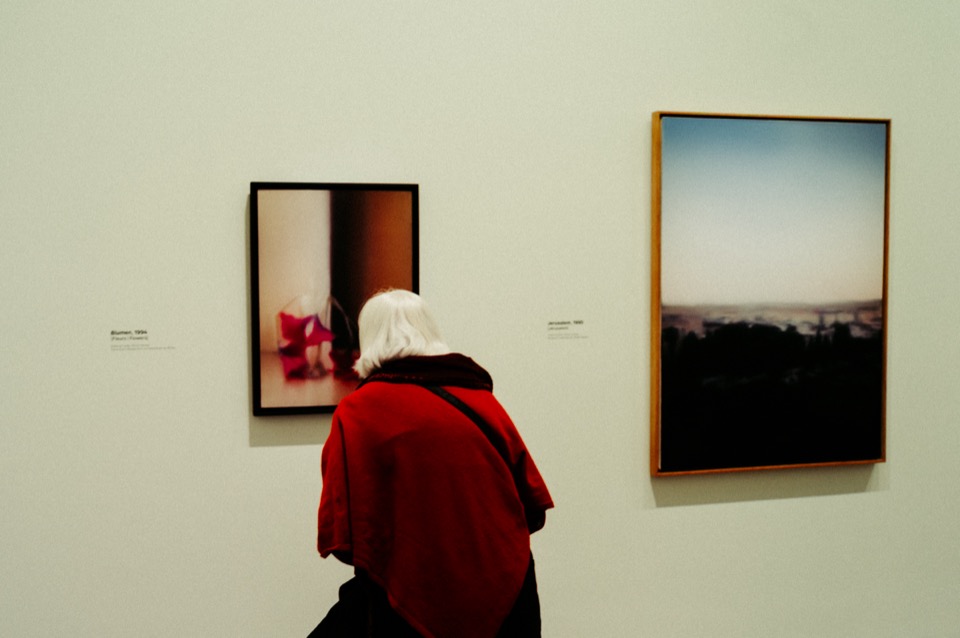

There is something about a museum that draws certain colours out of people. Perhaps it is the white walls, which make every hue louder. Perhaps it is the gravity of the place, which encourages visitors to dress as though they, too, are on display. Either way, red kept appearing — a thread connecting the viewers to the viewed.
Gehry’s Fondation Louis Vuitton is a building that refuses to hold still. Its glass sails catch the sky and throw it back in fragments — blue, grey, the reflection of a cloud that has already moved on. You climb the stairs and the city appears through panels of curved glass, warped and clarified at the same time, as if Paris were being seen through water.
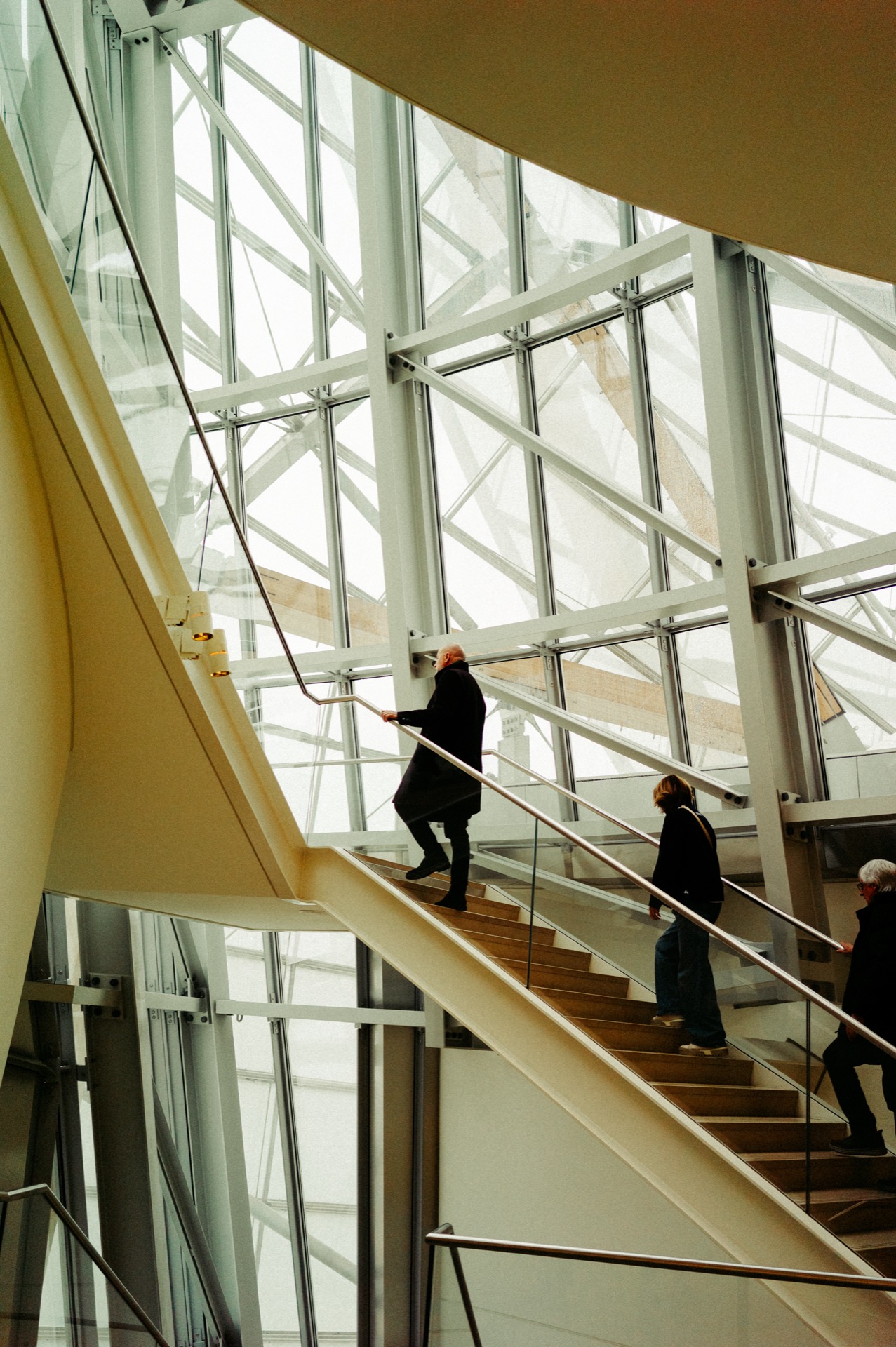
The staircase is the building’s spine. Figures ascend through layers of glass and steel, their silhouettes multiplied by reflections. From below, they look like specimens in a vitrine; from above, the city spreads out beneath them like a map they are about to step into. The building is not a container for art. The building is the art — a lens that refracts everything passing through it.
In the Richter rooms, a mirror. Not a painting of a mirror — an actual sheet of glass, backed with grey, hung at eye level on the gallery wall. You approach it expecting to see a Richter and instead you see yourself, standing in front of a Richter, surrounded by other people looking at Richters. The work swallows its audience whole.
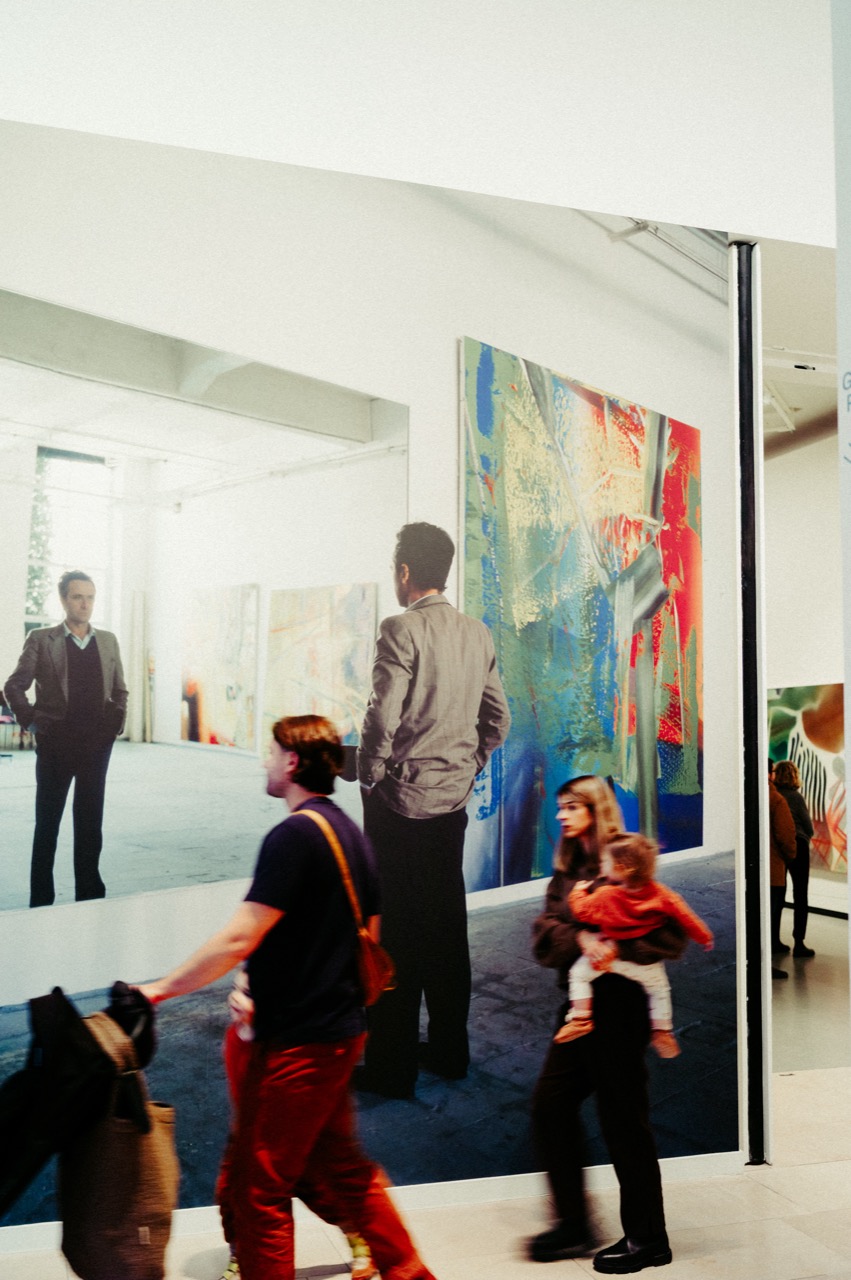
This is Richter’s oldest trick and his deepest one. The mirror collapses the distance between looking and being looked at. You are no longer outside the work, judging it from the safe shore of spectatorship. You are in it — moving, breathing, temporary. The painting will outlast you, and the mirror makes sure you know it.
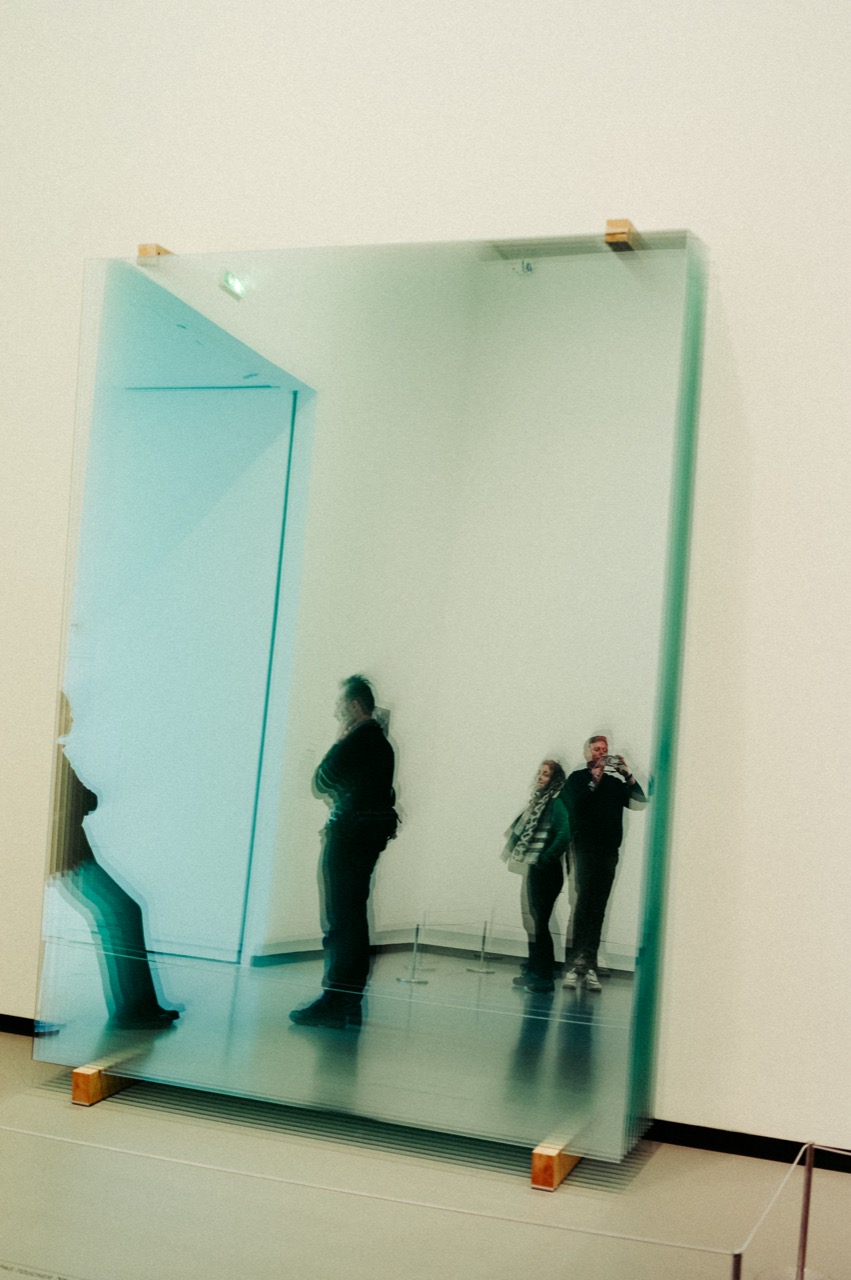
The glass partitions turned everyone into ghosts. Visitors drifted through Richter’s panels, their reflections layered over the work, half-transparent, neither fully present nor fully absent. It was not a photograph anyone planned. It was a collaboration between bodies, glass, light, and the building — the kind of image that can only happen when you stop trying to compose and let the architecture do it for you.
The mirror collapses the distance between looking and being looked at. You are no longer outside the work.
You leave the museum and the city takes over again. After hours of glass and silence, the street feels almost too real — the cold, the noise, the blunt democracy of a pavement where no one is curating anything.
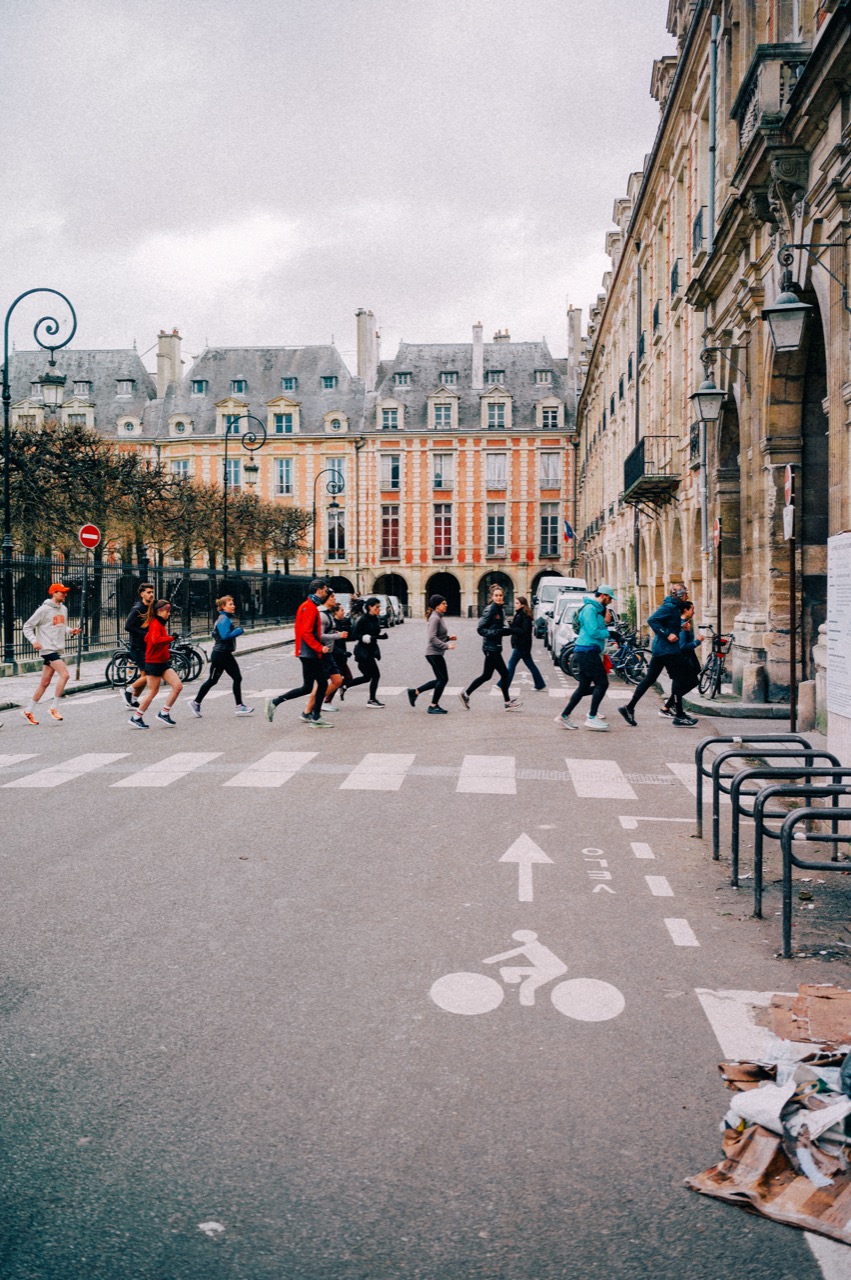
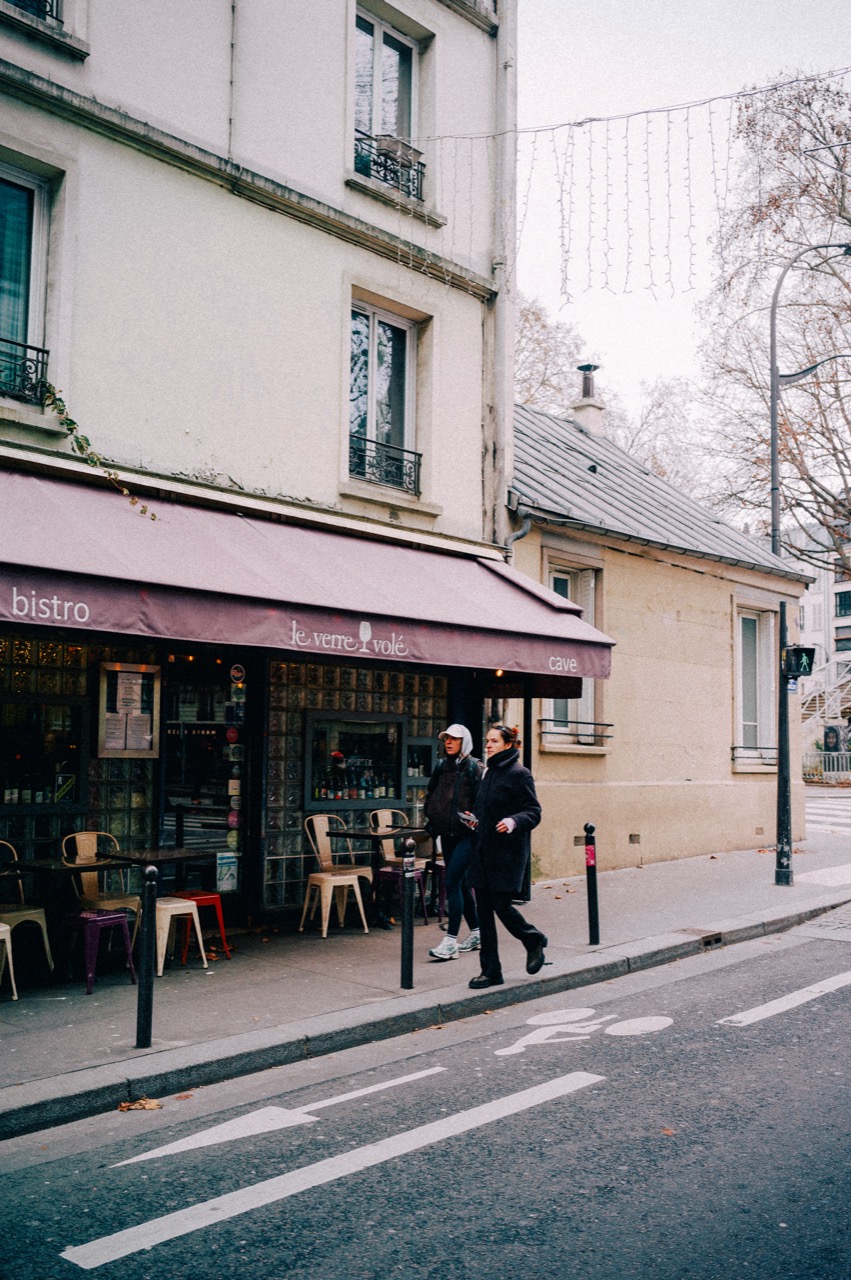
At the Place des Vosges a running group crossed in formation, their breath visible, their rhythm oddly beautiful against the seventeenth-century arcades. A few blocks further, a couple walked past Le Verre Volé without stopping, though the warm light through its windows made a case for staying.
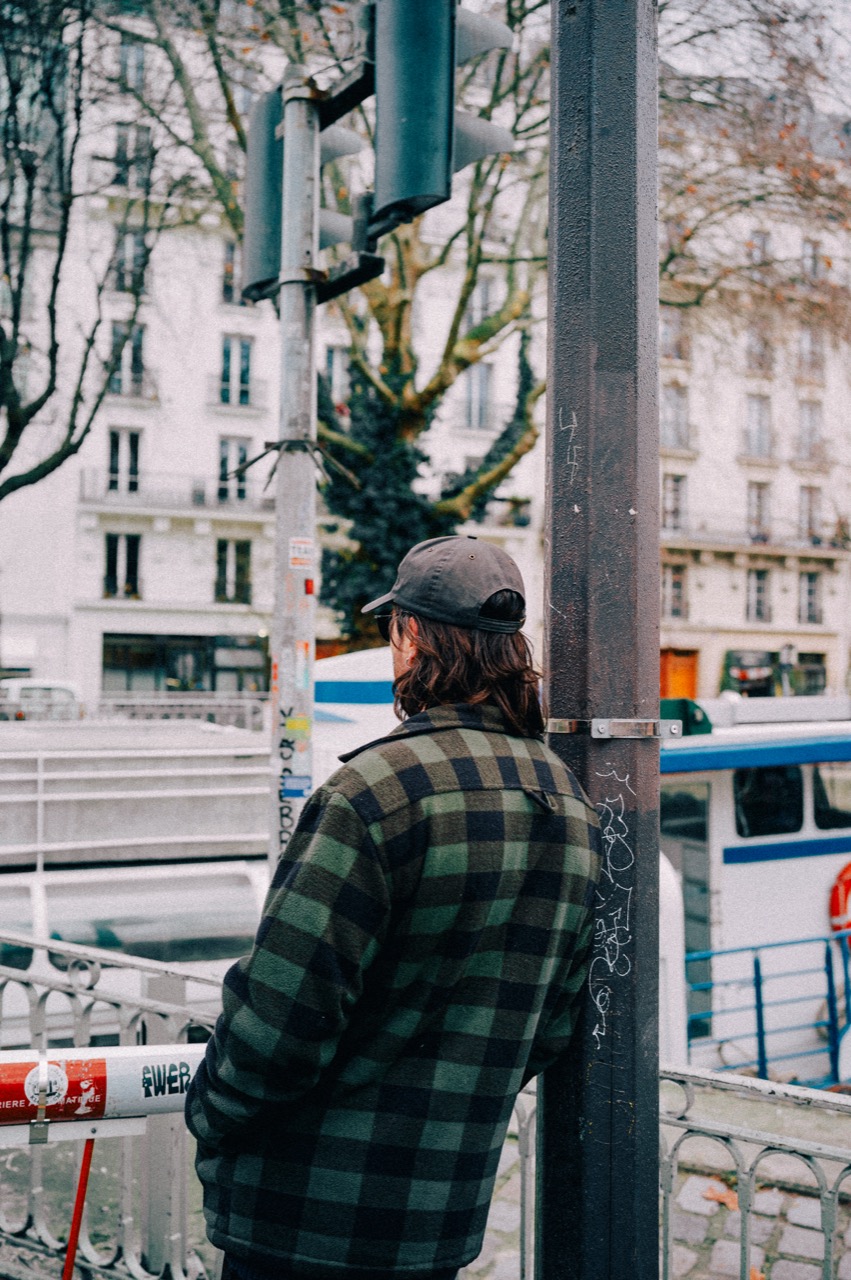
By the canal a man stood with his back to the water, watching nothing in particular. The city was doing what it always does — offering small compositions to anyone willing to stop and notice. After a day spent looking through glass, it was a relief to see without a frame.
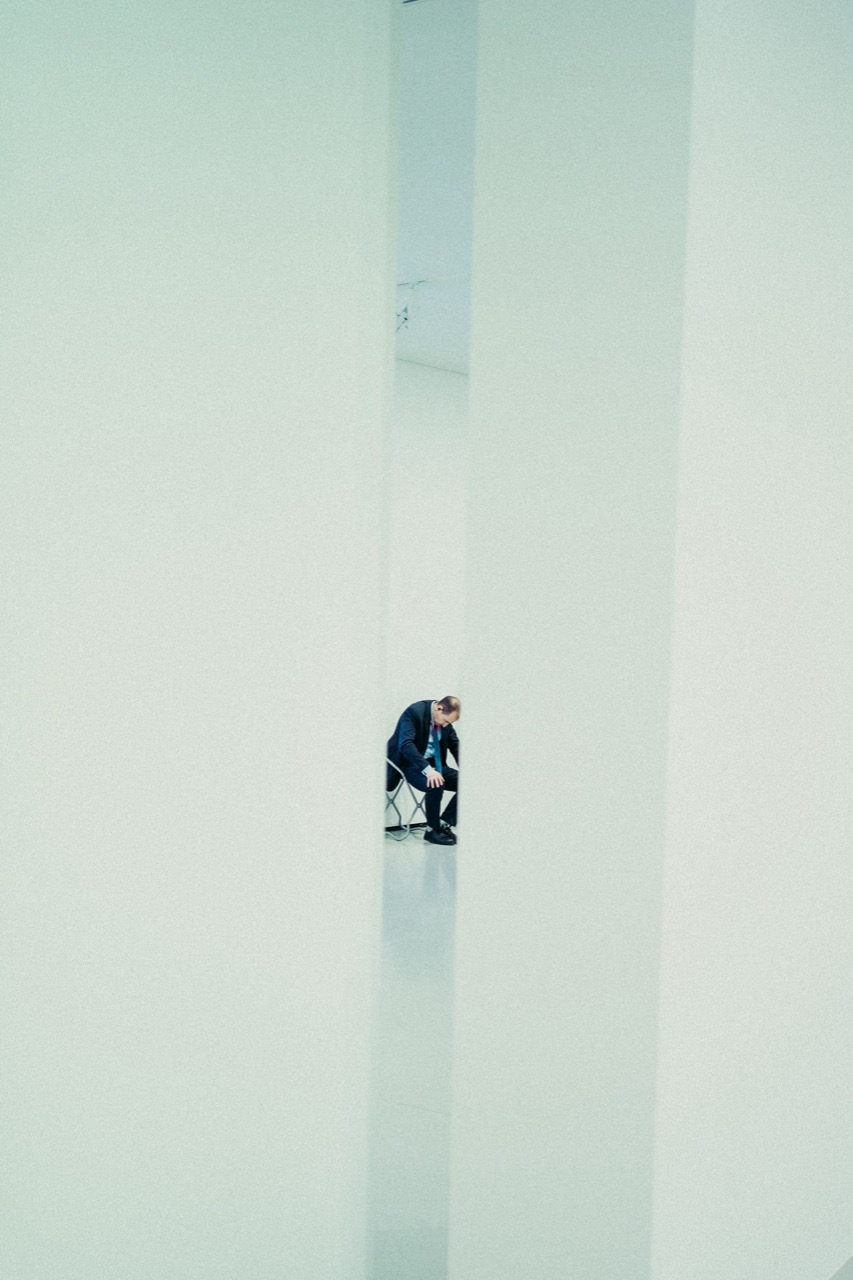
The last image is the simplest. A person seen through a narrow gap in a white wall. You cannot see their face, only a sliver of their body — a shoulder, an arm, the edge of a step. The wall decides what you are allowed to know.
This, in the end, is what every museum teaches. Seeing is never total. It is always partial, always framed — by a doorway, a pane of glass, the limits of your own attention. The frame is not a restriction. It is the condition that makes seeing possible at all. Without an edge, there is no picture. Without a gap, there is nothing to look through.